Portable Power Bank + Solar Panel vs. High-Capacity Power Bank – Which Setup Is Better for Hiking
Portable Power Bank + Solar Panel vs. High-Capacity Power Bank – Which Setup Is Better for Hiking
You’re two days into a three-day backcountry trip. Your phone is down to 15%, your offline map is only useful if the phone stays on, and the nearest outlet is miles away back at the trailhead.
Sound familiar?
For thousands of hikers and campers across the U.S., this is a real concern every weekend. Phones, GPS units, headlamps, cameras, and satellite communicators all need power. The longer you’re out, the more you find yourself watching that battery bar drop.
So here’s the real question: should you carry a larger power bank that can get you through the whole trip, or pack a smaller one and bring a solar panel to top it off along the way?
There’s no one-size-fits-all answer. It depends on how far you’re hiking, how much power your gear actually uses, and whether you’re covering miles every day or staying in one spot. Let’s break down what works best for the way you camp.
If You’re Covering Miles, Choose a High-Capacity Power Bank
If you’re the type of hiker who covers serious mileage every day — think 10+ miles, breaking camp early and rolling into the next site late — a high-capacity power bank is usually the smarter choice.
When you’re constantly on the move, you probably won’t have time to babysit a solar panel, chase direct sunlight, or adjust the panel every time the angle changes. Tree cover, cloudy weather, narrow trails, and changing terrain can also make solar charging unpredictable.
In this case, simplicity matters.
Charge your power bank before you leave, keep it in your pack, and pull it out whenever your phone, GPS, headlamp, or camera needs power. No setup, no waiting, no guessing.
For thru-hikers, backpackers, and anyone putting in long trail days, a reliable high-capacity power bank is often the most practical option.
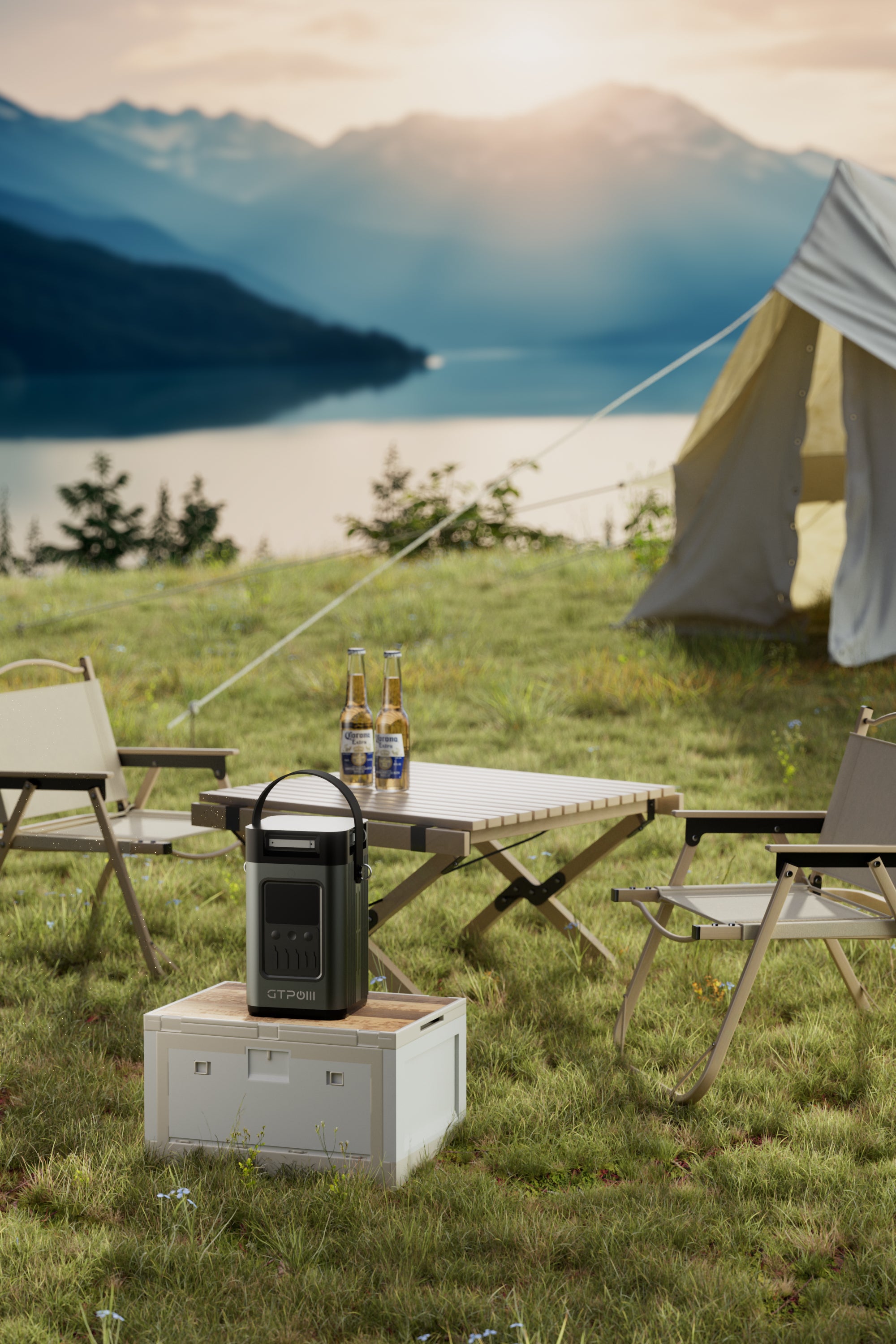
If You’re Base Camping, Add a Solar Panel
If your trip involves setting up a main camp and staying there for a while, a power bank plus a solar panel makes a lot more sense. This setup works best for hiking trips where you are not moving camp every day, such as:
- Setting up a backcountry base camp
- Spending two or more nights at the same campsite
- Doing day hikes from one main camp
- Hiking in open, sunny terrain with time to set up a panel
- Taking a slower-paced backpacking trip with longer breaks at camp
Solar works best when the panel is placed in direct sunlight for several hours. It is not always fast, and output depends heavily on sun angle, weather, shade, and panel size. But when you’re staying put, even a small solar panel can help extend your power supply and reduce how much battery you burn through.
So ask yourself one simple question:
Am I covering ground every day, or am I staying put?
If you’re moving all day, bring a larger power bank.
If you’re spending time at camp with good sunlight, pair your power bank with a solar panel.
How to Figure Out What Size Power Bank You Need
Choosing the right power bank starts with a little math and an honest look at your gear.
First, list every device you plan to bring:
- Smartphone
- GPS device or GPS watch
- Headlamp
- Camera or action camera
- Satellite communicator
- Smartwatch
- Rechargeable earbuds if you use them on trail
Then check each device’s battery capacity and think about how many times you’ll need to recharge it during the trip.
As a quick rule of thumb:
- A 5,000 mAh power bank can usually give a smartphone about one full charge.
- A 10,000 mAh power bank can usually charge a smartphone about two times.
- A 20,000 mAh power bank can usually charge most smartphones about three to four times, with extra power left for smaller devices.
Just remember: power banks do not deliver 100% of their rated capacity. Some energy is lost through heat, voltage conversion, cables, and charging circuits. In real-world use, you can expect around 15% to 30% capacity loss.
That means a 10,000 mAh power bank will not fully charge a 3,000 mAh phone three times. In most cases, it will be closer to two full charges, depending on the phone and charging conditions.
You should also factor in:
- Trip length
- Number of people sharing the power bank
- Whether your phone is your main navigation tool
- Weather conditions
- How often you use your camera or GPS
- Whether you can recharge from solar during the trip
For a solo weekend trip, 10,000 mAh may be enough.
For two people on a five-day trip with phones, GPS, and other small electronics, you’ll want more capacity.
Why the GTPOW 20,000 Swift Power Bank Works for Multi-Day Trips
That’s where the GTPOW Swift Power Bank 20,000 mAh comes in.
With 20,000 mAh of capacity, it gives you enough power to keep essential devices running through a multi-day trip. It is a solid choice for backpackers, weekend hikers, and anyone relying on their phone or GPS for navigation on multi-day trips.
One of its biggest advantages is 35W PD fast charging. That means it can recharge compatible devices quickly, and it can also recharge itself faster when connected to a suitable wall charger before your trip.
It supports wireless charging; simply place your phone on it to start charging. That’s especially helpful at camp when you don’t want to dig around for cables in the dark.
For longer trips or base camp setups, the GTPOW 20000 Swift Power Bank is also compatible with 10W solar panel charging. Pair it with a small foldable solar panel, and you can top off the power bank during the day when conditions are right.
At 498g, it is still packable for multi-day use and offers a strong balance between capacity, charging speed, and outdoor practicality.
The Bottom Line
Choosing between a power bank and a solar setup comes down to one question:
How do you move when you’re outdoors?
If you’re covering miles every day and need reliable power without stopping to manage gear, choose a high-capacity power bank like the GTPOW Swift 20,000 mAh.
If you’re setting up a backcountry base camp or spending more time at camp between shorter hikes, pairing your power bank with a small solar panel can help extend your power supply.
Either way, start by calculating your daily power use, then choose the setup that fits your trip style.
Get it right, and you’ll spend less time worrying about a dead phone — and more time enjoying the trail, the campsite, and everything you came outside to see.