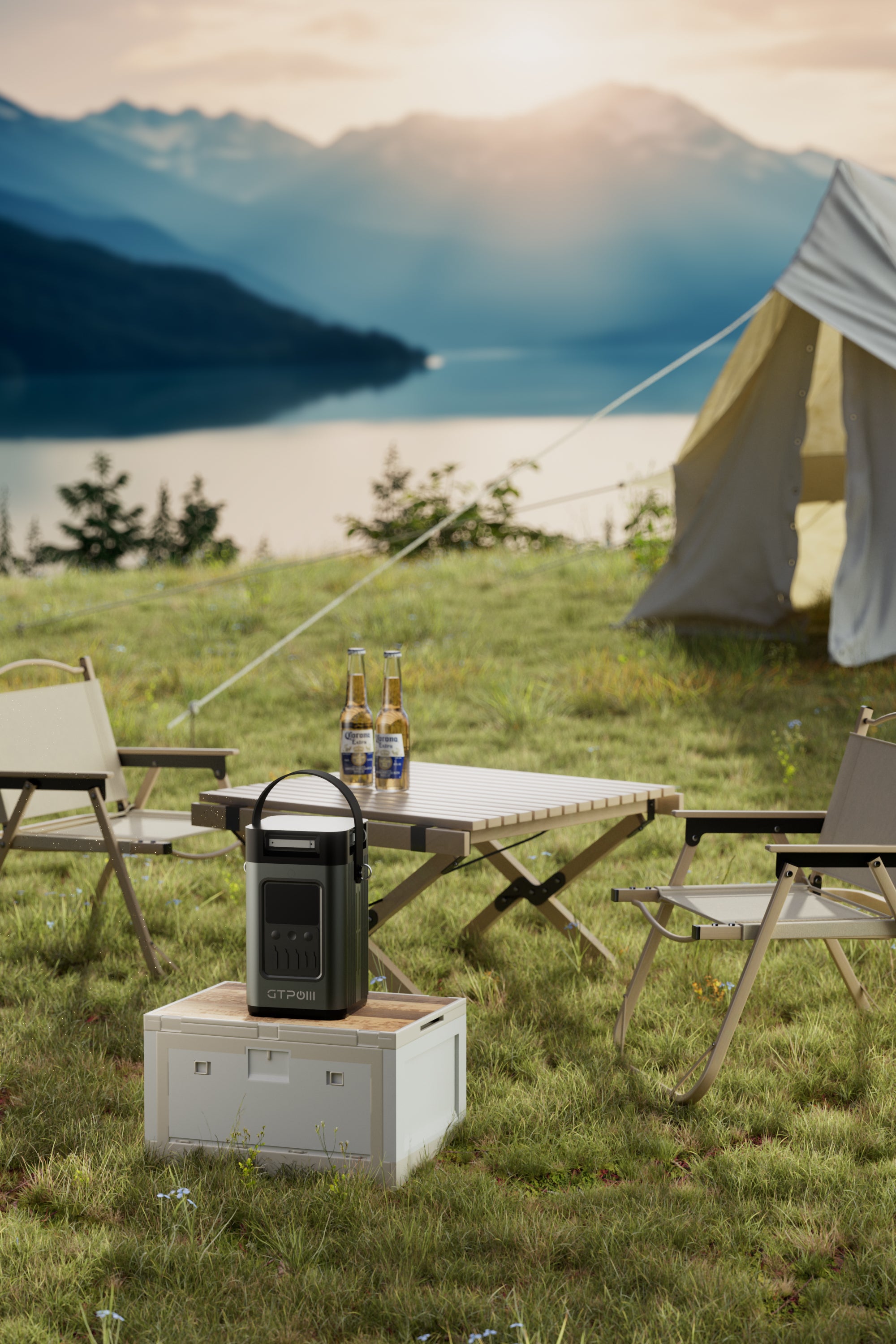
Why Add Portable Solar Panels to Your Outdoor or Power Equipment Business?
If you sell portable power stations, power banks, or outdoor gear, you've probably heard the question already. A customer buys a power station, then asks: "Can I charge this with a solar panel?"
If you don't have an answer, they'll find one somewhere else. That's the simplest reason to consider adding portable solar products to your lineup. But it's not the only one.
1. When Customers Need More Power, Solar Becomes Part of the Conversation
Your customers buy power stations for a reason. They want to stay off-grid longer. They want to run a fridge, charge devices, keep the lights on. And at some point, they realize the station's battery is finite. It runs out.
That's when the conversation shifts. How do I recharge without an outlet? How do I extend my time off-grid?
A portable solar panel is the natural answer. It doesn't replace the station—it extends it. It turns a one-day power supply into a multi-day one. For your customers, that's a meaningful upgrade. For you, it's a logical addition to the products you already sell.
2. Where Portable Solar Panels Fit in the Market
You don't need a market forecast to see where these products make sense. Look at how people actually use them:
-
Camping and overlanding — keeping phones, lights, and fridges running without hookups
-
RV travel — supplementing house batteries and reducing generator use
-
Emergency backup — keeping essential devices alive when the grid goes down
- Off-grid living — cabins, sheds, remote work sites, and anywhere outlets aren't available
These aren't niche scenarios. They're mainstream activities that already drive sales of power stations and outdoor equipment. Portable solar panels fit directly into that ecosystem.
The demand isn't speculative. It's already there. The question is whether you're capturing it or sending it to a competitor.
3. How Portable Solar Panels Complement Your Existing Lineup
This is where the business case gets practical.
If you sell power stations, adding solar panels lets you offer a complete solution. Instead of just selling a battery, you're selling a system: storage plus generation.
You can bundle them. A 500Wh station with a 100W panel. A 1000Wh station with a 200W panel. Customers who buy the bundle spend more, and they walk away with something that actually works together.
You can also offer different power levels. Not every customer needs 200W. Some just want to top up a phone and a headlamp. Others want to run a fridge. Having a range of options lets you match the product to the use case.
And because solar panels are a natural accessory, they open the door to repeat purchases. A customer who buys a station today might come back for a panel next month. Or upgrade to a larger panel when they buy a bigger station.
It's not a separate product line. It's an extension of what you already do.
What the Numbers Look Like
Industry data on attach rates is limited, but retailer feedback and supplier estimates suggest a practical range:
-
Attach rate: Among customers who buy a power station, roughly 10–20% also buy a solar panel in the same transaction. The rate rises when staff explain compatibility at the point of sale.
-
Typical margin: Portable solar panels often carry a margin similar to or slightly higher than power stations—often 25–40%, depending on brand, volume, and channel.
-
Return rate: Panels have a lower return rate than power stations when compatibility is confirmed before purchase. Most returns stem from connector mismatches or unrealistic output expectations, not product defects.
-
Repeat purchase: Customers who buy a panel with their first station often return for a second panel or a larger model within 12–18 months.
- MOQ and lead time: Typical minimum order quantities range from 100 to 500 units for standard models, with 30–60 day production lead times. Custom branding or packaging may increase both. Always confirm with your supplier.
These figures vary by region, customer type, and how the products are presented. Use them as planning reference points, not guarantees.
4. How to Differentiate Your Business Beyond Price
Selling on price alone is a race to the bottom. Portable solar products give you other ways to compete.
Compatibility. Does the panel work with the power stations you sell? Does it have the right connectors? Can it charge multiple devices directly? These are questions customers ask. If you have answers, you stand out.
Product selection. Offering a curated range—not just one panel, but the right panel for different needs—shows expertise. Customers trust a retailer who understands the differences.
Warranty and support. A clear warranty and responsive customer service matter more than a few dollars off. If something goes wrong, the customer wants to know you'll help.
Technical support. Can you explain how to set up the panel? How to angle it? What to expect on a cloudy day? Good advice builds loyalty.
Documentation. Clear manuals, spec sheets, and compatibility charts make it easier for customers to buy with confidence. They also reduce returns.
You don't win by being the cheapest. You win by being the most helpful.
5. How to Test a New Product Category Without Overcommitting
Adding a new category doesn't mean betting the business. You can start small.
1. Choose a focused initial SKU set. Pick one or two panel sizes that match your most popular power stations. Don't try to cover every wattage on day one.
2. Calculate landed cost carefully. Include shipping, duties, and any import fees. Know your true cost before you set a price.
3. Confirm MOQ and lead times. Ask your supplier what the minimum order is and how long production takes. Factor that into your cash flow.
4. Test with a small batch. Bring in a limited quantity. See how your existing customers respond. Track sell-through, not just initial interest.
5. Scale based on results. If the panels sell, expand the range. If they don't, you've learned something without a major loss.
There's no guarantee that every solar product will be a high-margin, low-risk winner. Treat it like any new category: test, measure, and adjust.
6. What to Look for in a Portable Solar Product Supplier
Before you commit to a supplier, evaluate them on these criteria:
- Manufacturing background. Do they own their production, or do they outsource? How long have they been in the industry?
- Product range. Can they cover different wattages and form factors?
- Certifications. Do they have UL, CE, TÜV, RoHS, and other relevant certifications?
- OEM/ODM capability. Can they customize branding, packaging, and connectors?
- Quality documentation. Are spec sheets, test reports, and warranty terms clear and available?
- After-sales support. What happens if a product fails? Who handles the claim?
- Production capacity and lead times. Can they handle your order volume consistently?
GTPOW is one option that meets these criteria. The parent company, Gaotu Innovation, has nearly 20 years of experience in solar manufacturing. It's headquartered in Shenzhen, with manufacturing centers in Dongguan, Indonesia, and Malaysia. They support OEM/ODM customization, carry relevant certifications, and provide after-sales support. These are the kinds of credentials you can verify—not just marketing claims.
If GTPOW is on your shortlist, keep the first conversation focused:
1. Identify your target customers and use cases. Are they weekend campers? RV owners? Emergency preppers?
2. Choose an initial product. Pick one or two panels that match the power stations you already sell.
3. Confirm compatibility. Check connectors, voltage ranges, and input limits.
4. Verify purchasing terms. MOQ, pricing, lead times, and warranty.
5. Run a small market test. Order a limited batch, promote it to your existing customers, and see what happens.
You can expand once you know which products people understand, use, and come back for. If you'd like to explore a partnership, visit our Become a Partner page for more details.
7. Conclusion
Adding portable solar panels to your business isn't just about selling one more item. It's about helping your existing customers solve a problem they already have: how to keep their devices powered when they're away from an outlet.
Whether it's worth introducing depends on your customers, your product mix, and the actual sales results you see. But if you're already selling power stations and outdoor gear, the conversation is already happening. You can either join it or leave it to someone else.
A small, focused test with the right supplier is the most practical way to find out. Use the numbers above as a starting point, verify the details with your supplier, and let your customers tell you whether the category belongs in your store.