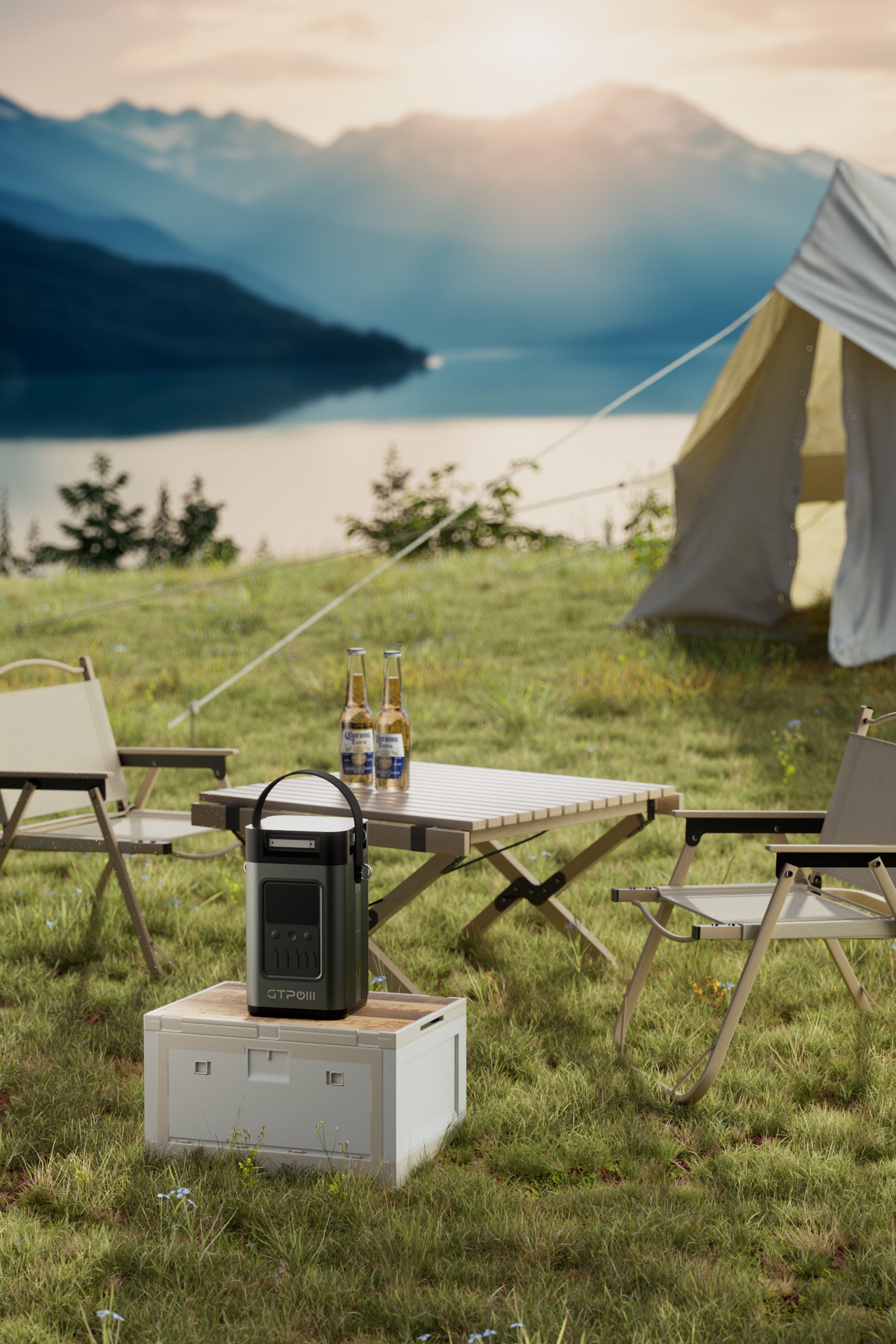
Portable Solar Panel for Fall Camping: A Multi-Day Charging Routine
On a one-night trip, a half-charged phone might be an inconvenience. On day four of a fall camping trip, it feels a lot more important.
Shorter days, shifting shadows, and cold mornings make solar less predictable than it was in summer. You don’t need a strict schedule to deal with that. You need a simple habit: collect power when your campsite has good sun, store it for later, and keep enough in reserve for the next day.
Here’s what that looks like on a real trip.
Start With What You Need at Night
Before you think about how much sun you’ll get, think about what you’ll use after sunset.
Your phone, headlamp, and any safety or navigation devices come first. A camera, speaker, or string lights may be nice to have, but they shouldn’t take priority over the gear you’re counting on.
Charge your power station, power banks, and devices before you leave home. Solar is there to replenish what you use, not to rescue an empty setup on the first cloudy afternoon.
A power station also makes your routine easier. Let the panel charge it when sunlight is available, then charge your smaller devices from stored power when it suits you. Directly charging a phone from a panel can work in steady sun, but passing clouds may interrupt the connection.
Build Your Day Around the Sun You Actually Have
A good fall routine starts with a look around camp—not a look at the clock.
Morning: Find the sunny spot
Take a minute after breakfast to see where the sun reaches the ground. In fall, a spot that looks open from your tent may still sit in the shadow of trees or a hillside.
Set up the poratble solar panel where it can get direct light, tilt it toward the sun, and secure it against wind. Keep the power station dry and within its specified operating temperature range. You can usually leave the panel in the sun while placing the station somewhere more sheltered, using an appropriate cable and following the manufacturer’s instructions.
If the station became very cold overnight, check its charging-temperature guidance. Some lithium battery systems will limit or stop charging when their cells are too cold. Give the station time to return to an allowed temperature; don’t assume a few minutes in the sun will do it, and don’t wrap it in bedding to warm it up.
Middle of the day: Give charging your best hours
For many campsites, the strongest sunlight comes around the middle of the day. Use that opportunity to charge your power station. Check once in a while for moving shade and adjust the panel if a better spot opens up.
There’s no dependable “10 AM to 2 PM” rule. At a wooded campsite in Pennsylvania, trees may shorten your direct-sun window. At an open campsite in the Southwest, you may have more room to work with. A mountain valley can lose sun early even on a clear day.
What matters is simple: when your campsite gets good sun, make use of it.
This is also where your plans for the day come in. If you’re heading out on a long hike, only leave a solar setup charging at camp if the location, weather, and equipment make it safe to do so. Otherwise, charge while you’re around camp and rely on the power you brought with you.
Late afternoon and evening: Check your reserve
As shadows stretch across camp, see whether the foldable solar panel is still producing useful power. There’s no need to pack it away at a set hour—or at a set battery percentage. If it’s still in direct sun and conditions are suitable, let it keep charging.
Before dusk, check the forecast and your equipment’s weather guidance. Secure or pack the poratble solar panel as needed, and keep connectors protected. If you pack the panel damp, dry it properly when you can.
At night, use the power you collected. Charge the phone and headlamp you’ll need tomorrow, then decide whether the extras are worth it. Keep the power station dry, ventilated, and used within the limits in its manual—not inside a sleeping bag or tucked against your body.
What Changes on a Cloudy Day?
A cloudy day doesn’t always mean zero solar power. It does mean you shouldn’t count on the solar panel delivering the same charge you got in direct sun.
If the weather is unsettled, you can still set up the foldable solar panel when it’s safe and practical. Just treat anything it collects as a bonus. Protect your reserve by charging the essentials first and cutting back on optional use.
Two cloudy days in a row call for a bigger adjustment. Check how much power you have left against how many nights remain, not against an arbitrary battery percentage. If you’re close to a vehicle and have a compatible charging option, that may be a useful backup. Follow the charger and vehicle instructions, and never run an engine in an enclosed space.
A Simple Plan for Four or Five Days
You don’t have to predict exactly how much energy the poratble solar panel will collect each day. Work with a plan that can bend when the weather changes:
- Before departure: Charge the power station, power banks, and essential devices.
- On sunny days: Put the foldable panel in a genuinely sunny spot and recharge while the opportunity is there—even if the station isn’t close to empty.
- Each evening: Make sure tomorrow’s essentials are ready, then check your remaining reserve.
- When the forecast turns poor: Use less optional power early, rather than waiting until you’re nearly out.
- For longer trips: Bring enough stored power—or a suitable backup charging option—for the possibility that solar contributes very little on some days.
Fall solar works best when you think of it as a way to stay ahead, not a daily promise to refill everything. Catch the good sun when it appears, protect the power you’ve stored, and keep your essentials ready for the next morning. That’s a rhythm you can use in an eastern forest, a mountain campground, or an open desert campsite—even though the sunlight at each will look very different.