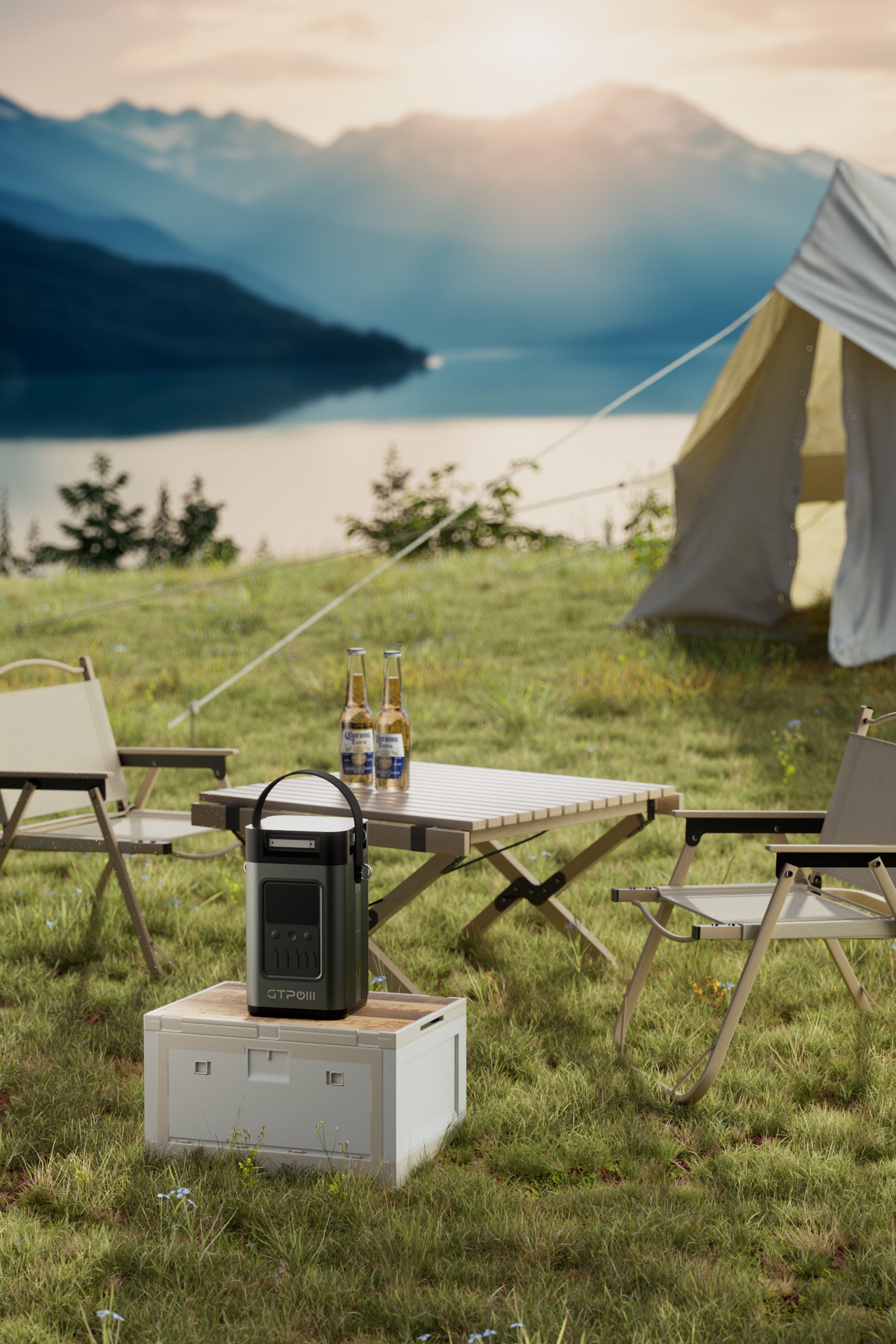
Are Portable Solar Panels More Efficient at High Altitude? What Campers Should Know
The sun feels fierce at a mountain campsite, even when the air is cool enough for a jacket. Does that mean your portable solar panel will charge your power station faster?
Possibly—but altitude alone won’t do it. Cooler conditions can help a panel produce power, while a shaded campsite or a cold power station can undo that advantage. Here’s what to look for before you buy a panel or set one up in the mountains.

Do Portable Solar Panels Work Better at High Altitude?
Solar panels generally produce less power as their cells get hotter. Cooler mountain air may help a panel avoid some of the heat-related losses it would experience on a hot day at lower elevation. Clear, open skies can help too.
But the panel won’t stay as cool as the air around it when it’s sitting in direct sun. And a great hour of sunlight doesn’t guarantee a great day of charging. A ridge may shade your campsite by mid-afternoon, or clouds may roll in just when you expected to top up your power station.
So yes, high altitude can favor solar charging. It isn’t a reason to expect a fixed boost from a 100W panel every time you head uphill.
Why Your Power Station May Charge Slowly in the Mountains
Picture this: your portable solar panel is in bright morning sun, but your power station shows little or no input. The problem may not be the panel.
A cold night can leave some power stations outside their permitted charging temperature range. They may slow or pause charging until they warm up. Solar-input limits matter as well: even if the panel could produce more power, the station won’t necessarily accept it.
Before a mountain trip, check your station’s charging-temperature range and solar-input specifications. Also check that the panel’s connector and voltage are compatible. A panel’s open-circuit voltage rises in cold conditions, which is especially relevant if your setup is close to the station’s maximum input voltage.
You don’t need to do those checks at the campsite with cold fingers. Do them at home, then enjoy the view.
How to Choose a Portable Solar Panel for Mountain Camping
Start with the way you travel. A panel you can carry comfortably and set up on uneven ground is more useful than one whose specifications look impressive but rarely make it out of the vehicle.
The GTPOW 100W bifacial folding panel is one option to compare. It’s listed at approximately 3.5 kg with its carry bag, which has a silver reflective lining inside, and the panel itself features an ETFE surface. Those details help you judge its carrying weight, construction, and reflective potential for repeated outdoor trips.
Its bifacial design can also receive light on the rear side. At a mountain campsite with snow or other light-colored ground, reflected light may add to its output—provided the back of the panel has room to receive it. Treat that as a possible bonus, not power you can count on when planning your trip.
How to Set Up Your Solar Panel at a Mountain Campsite
At camp, look at the terrain before choosing a spot. A sunny patch at noon may sit in a ridge’s shadow a few hours later. Give the panel clear sun for as much of your available charging window as you can, and set it on stable ground using its stand as directed.
Keep your power station protected from weather and within its permitted temperature range, with its vents clear. If it won’t charge after a cold night, follow the manufacturer’s instructions rather than wrapping it in a sleeping bag or putting it in a sealed box.
And watch the wind. If the panel starts sliding or lifting, pack it away. The charging cable isn’t a tie-down.
FAQs
1. Will a 100W solar panel produce 100W at high altitude?
Not consistently. The 100W rating comes from standard test conditions, not a guarantee at camp. strong sun and cooler air can help, but shade, angle, heat, and your power station all affect input. That said, a bifacial panel can get closer to its rated output in reflective environments—light bouncing onto the back side adds to what the front collects, and on pale sand, snow, or a reflective surface, that rear-side gain can help it reach or approach 100W.
2. Is a bifacial panel useful at a snowy campsite?
It can be. Snow may reflect light onto the rear of a bifacial panel, if the back is exposed. Don’t plan your power needs around a guaranteed extra output, and keep the panel securely positioned.
3. Can I charge my power station after a freezing night?
Check your model’s permitted charging-temperature range. Some power stations pause charging when their batteries are too cold. Let the station return to its approved range according to its manual before charging.
4. Will stronger mountain UV damage a portable solar panel?
Long-term sun exposure can affect outdoor materials. An ETFE surface is a relevant feature to compare—but durability also depends on the panel’s overall construction and care.
The Bottom Line
Portabel solar panels can perform well at high altitude, but the best result depends on the whole setup. Cooler weather may help the panel; mountain shade, gusts, and a cold power station may work against you.
When choosing a panel, check compatibility first. Then look at what will matter on the trip: carrying weight, a practical stand, and how easily you can place it in the sun. The GTPOW 100W bifacial folding panel gives you a concrete option to compare on those points—not a promise that elevation will make it charge faster.