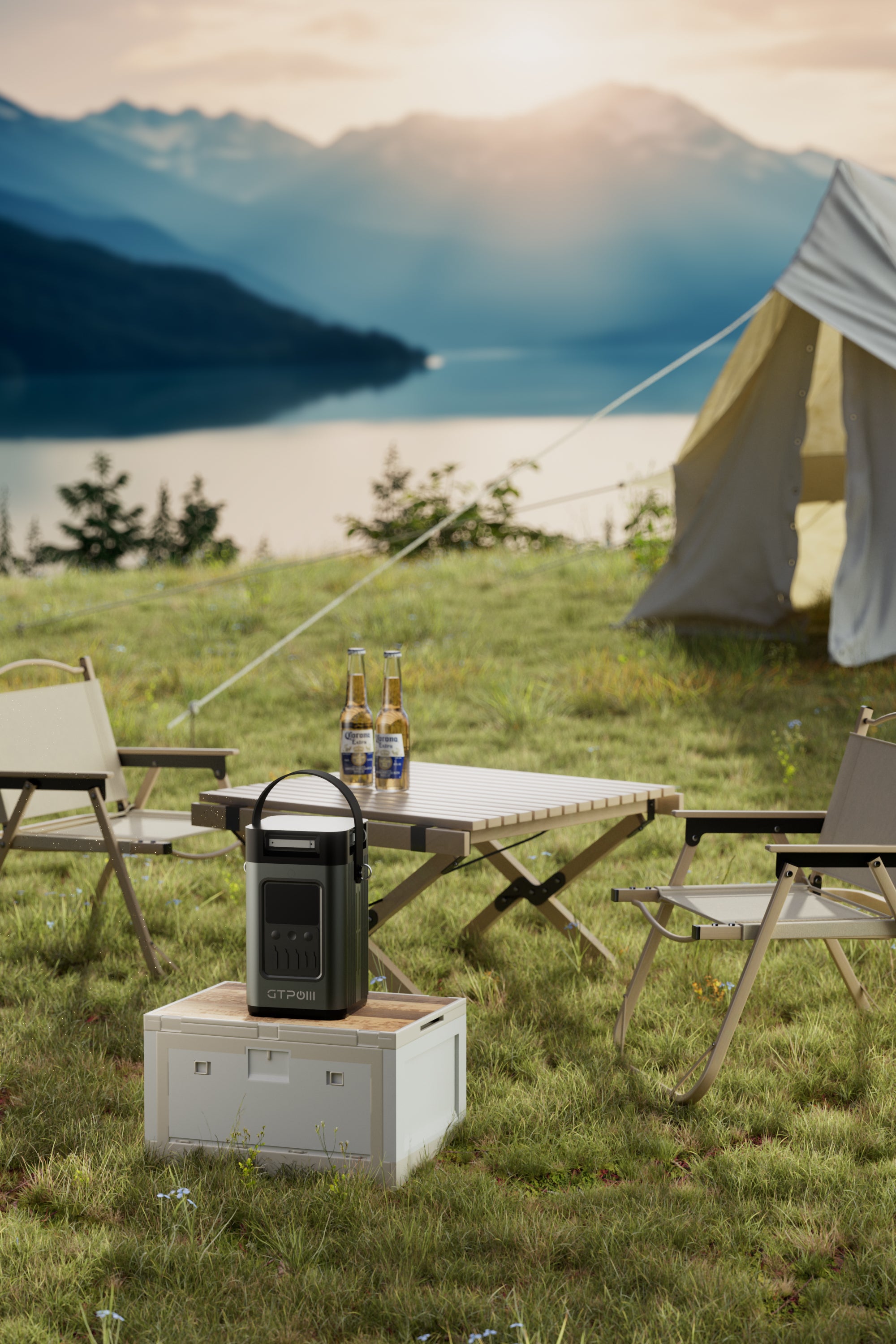
What Can a 100W Portable Solar Panel Run? A Camping Power Guide
A 100W portable solar panel is one of the most popular sizes for camping and outdoor use. It’s large enough to be genuinely useful, but still compact and easy to carry. Most people buy it to charge a portable power station, and that remains its main job. However, many modern 100W solar panels can also charge devices directly.
With built-in USB and DC ports, a 100W panel can power phones, laptops, LED lights, small fans, and other low-power gear without needing a power station in between. This makes it more flexible than older panels that only worked through a battery.
What Can It Actually Run?
A 100W portable solar panel has limited daily output, so it’s important to match it with the right devices. Here’s a realistic breakdown of what it can support, either through direct charging or when paired with a portable power station.
Direct charging (via built-in USB-A, USB-C, or DC ports):
- Smartphones and tablets — multiple charges per day
- Laptops (especially ultrabooks) — can usually be topped up once or twice
- LED camp lights and lanterns — several evenings of use
- Small portable fans — continuous use for several hours
- Power banks — a 10,000mAh bank can typically be recharged in 2 to 4 hours
- Camera and drone batteries — several batteries can be recharged throughout the day
Through a portable power station:
- Small camping fridges (average 20–40W) — can usually run for 8 to 14 hours, depending on ambient temperature and usage. Running it continuously for a full 24 hours is often not realistic with a single 100W panel.
- Low-power water pumps — suitable for portable showers or water transfer in small quantities.
- Wi-Fi routers and satellite communicators — can stay powered for extended periods.
- Some low-power CPAP machines — possible for a full night with efficient models and a properly sized power station, but higher-power units with humidifiers may exceed available energy.
- Bluetooth speakers and portable monitors — easy to keep running throughout a weekend.
For most campers, direct charging handles phones, lights, laptops, and small electronics, while the power station is better reserved for devices that need stable or nighttime power, such as fridges or medical equipment.
It’s worth noting that a 100W panel provides a limited amount of energy each day. Heavy use of higher-draw devices will require careful power management and realistic expectations about runtime.
Why a 100W Panel Can Run These Devices
Daily Output: What a Day of Sun Actually Gives You
Over a full day of good sun, a 100W panel typically delivers 300Wh to 600Wh of usable energy. That's enough to charge a smartphone several times, keep LED lights running for hours, or top up a laptop.
The panel doesn't push a full 100W all day long—real-world peak output usually falls between 70W and 90W, depending on sun angle, temperature, and dust. But over a whole day, that still adds up to a solid amount of power for weekend camping.
Built-In Ports: Skip the Power Station for Small Devices
Many 100W panels now include built-in charging ports with voltage regulation. This lets you plug devices straight into the panel safely. For example, the GTPOW 100W portable solar panel comes with a DC port (24V/4.2A), two USB-A ports, and a USB-C port, making it convenient to charge phones, laptops, and power stations from the same panel.
Charge a Power Station First: The Most Reliable Way to Use Solar
For most users, the most reliable setup is still charging a portable power station first, then running devices from the station. The power station acts as a buffer, giving steady output even when sunlight changes. A 100W panel works well with power stations up to around 800Wh. It can charge larger stations too, but it will take longer.
FAQ
Q: How much power does a 100W solar panel produce in a day?
It depends on sunlight. In strong, direct sun you can expect roughly 300Wh to 600Wh per day. On cloudy or overcast days, output drops sharply — sometimes to just 10–25% of that amount.
Q: Does a 100W panel actually output 100W?
Not usually. Real-world output in good conditions is typically 70W to 90W. Factors like panel angle, temperature, dust, and cable losses all reduce the actual power.
Q: How long does it take to charge a 512Wh power station with a 100W panel?
Under good sunlight, it usually takes 5 to 7 hours for a full charge. Results vary with weather and panel positioning.
The Bottom Line
A 100W portable solar panel is a practical choice for weekend camping and short trips. It can charge phones, laptops, lights, and small fans directly, or keep a portable power station topped up throughout the day. For most campers who want simple, reliable power without carrying a generator, it strikes a good balance between size, weight, and usefulness.