Do Solar Panels Produce More Power in Summer or Winter
Most people assume summer is the best time for solar. Longer days, more sunlight—makes sense, right? But here's the catch: solar panels don't love heat. They actually lose some efficiency as temperatures climb. That means the season with the most sunshine isn't always the season with the most power in your battery.
So which season actually wins? Here's the ranking for most of the U.S.:
1. Spring – highest total output
2. Fall – second highest
3. Summer – third
4. Winter – lowest
Surprised? Let's break down why.
Why Spring and Fall Are the Best Seasons for Solar Power
Spring and fall hit the sweet spot for solar generation. Here's what's working in their favor:
The temperature is just right. Most of the U.S. sees spring and fall temps in the 50°F to 77°F range. That's close to ideal for solar panels, which are tested and rated at 77°F. In that range, there's almost no power loss from heat. Panels start losing a bit of output for every degree above that, and the hotter they get, the more they lose.
There's still plenty of sunlight. Spring and fall days aren't as long as summer, but they're a lot longer than winter. On top of that, most fixed solar panels are tilted to roughly match your local latitude—a setup that balances performance across the whole year. That middle-ground angle happens to line up especially well with the sun's position in spring and fall.
The air is clearer. Lower humidity and less haze in spring and fall mean more sunlight actually reaches the panel instead of getting scattered on the way down.
Do Solar Panels Work Worse in Hot Weather?
Summer has the longest days and the strongest sunlight. But that intensity comes with a catch: heat.
On a hot summer afternoon, panel temperatures can climb well above 140°F—way past the 77°F they're rated for. The hotter the panel gets, the less efficiently it converts sunlight into power. In real-world conditions, that heat penalty can cut output by somewhere around 10% to 18% compared to a cooler day with the same sunlight. That's a big enough hit that summer's extra daylight hours don't fully make up for it.
Worth noting: this ranking holds true for most of the country, but not everywhere. In consistently hot, sunny regions like Arizona or the desert Southwest, summer can sometimes edge out spring or fall. And in places like the Pacific Northwest, where summer is often the only stretch of reliably clear skies, it can outperform a cloudy spring.
Do Solar Panels Work Better in Cold Weather?
Winter has the opposite problem. Cold weather is actually good for solar panels—lower temperatures mean the panel converts sunlight more efficiently, so a panel can technically perform better in the cold than in the heat.
But that advantage gets erased by everything else working against it. Days are short, the sun sits low in the sky, and cloud cover shows up more often in a lot of the country. Snow makes it worse—even a light dusting on the glass can drop output to zero until it melts or gets brushed off. There's just not enough total sunlight in the day to make up for how efficient the panel is at converting it.
Best Season for Solar Camping and RV Trips
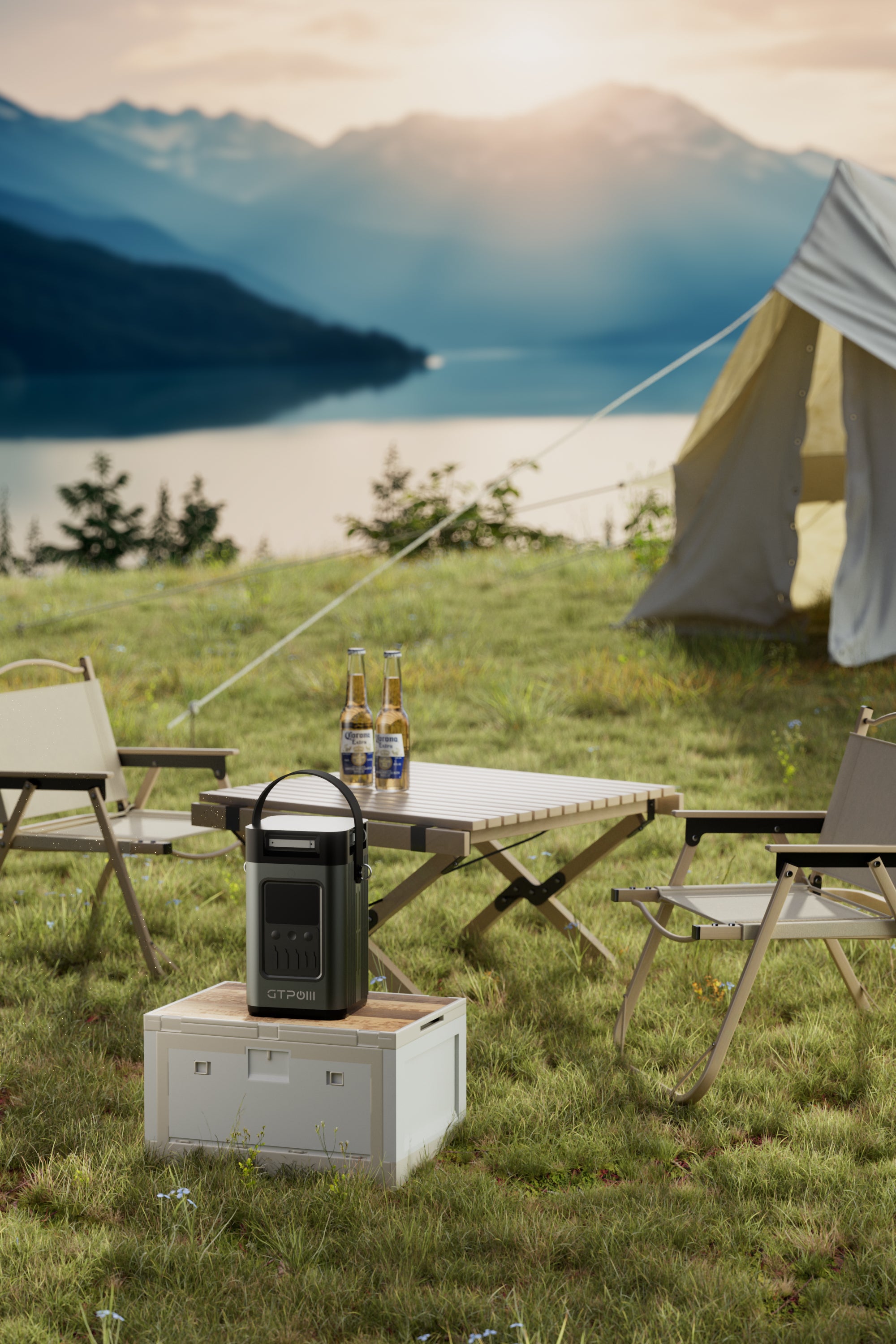
Spring and fall aren't just the best seasons for solar output—they're also the best seasons to be outside using it. Temperatures are comfortable, campgrounds are less crowded, and the scenery is at its best. Lithium batteries, which power most portable stations, also work better in moderate temps, so your whole setup runs a little more efficiently when it's not freezing or scorching outside.
Fall is right around the corner. If you've been thinking about adding solar to your camping setup, RV, or off-grid system, now's a good time to get moving. The GTPOW lineup includes 40W to 100W high-efficiency foldable solar panels, along with rigid and flexible options, so you can find the right fit whether you're topping off a portable power station or building out a full RV system.
The Bottom Line
Summer has the longest days, but heat eats into your panel's output. Winter has the coolest temps, but the sun just isn't around long enough to take advantage of it. Spring and fall land right in the middle—warm enough to avoid the heat penalty, sunny enough to rack up solid daily output.
For most of the U.S., that means spring comes out on top, followed by fall, then summer, then winter. If you're planning a solar-powered trip, spring and fall are your best bet for getting the most out of your panels. And if you're shopping for new gear, the mild fall weather makes it a good time to get everything set up before the short days of winter roll in.