Can You Run a Portable Fridge With a 100W Solar Panel?
Yes—a 100W solar panel can help power a portable compressor fridge, but it may not replace everything the fridge uses each day.
For a straightforward camping setup, connect the panel to a compatible portable power station, then connect the fridge to the station. The battery keeps the fridge running through passing clouds and after sunset.
Whether 100W is enough depends on three things: daily fridge consumption, available sunlight, and usable battery capacity. Compare those numbers before relying on the setup for a weekend away.
Why a 100W Solar Panel Can Work
A compressor fridge does not normally draw its running wattage continuously. It cycles on and off to maintain temperature.
Consider a fridge drawing 50W while its compressor runs:
-
30% running time: 50W × 24 hours × 0.30 = 360Wh per day.
-
40% running time: 480Wh per day.
- 50% running time: 600Wh per day.
These are examples, not guaranteed consumption figures. Hot weather, freezer settings, warm groceries, and frequent opening can increase running time considerably.
Solar production also varies. A useful planning calculation is:
Panel watts × peak sun hours × system yield factor = estimated daily energy.
With five peak sun hours and an illustrative 0.75 yield factor, a 100W solar panel produces about 375Wh per day at the assumed measurement point. Further storage and output losses may apply.
Peak sun hours describe equivalent full-strength sunlight, not simply daylight hours.
The takeaway: 100W can cover a low-consumption fridge in favorable conditions. For a fridge using 480–600Wh daily, it will often extend battery runtime rather than maintain a daily energy balance.
Why You Need a Battery Between Solar Panel and Fridge?
A standard solar panel is not a regulated 12V appliance supply. Its voltage and available power change with conditions, and its output may not match the fridge’s requirements.
Connecting an ordinary panel directly to a fridge can cause unreliable operation or expose the appliance to unsuitable voltage. It also provides no overnight power.
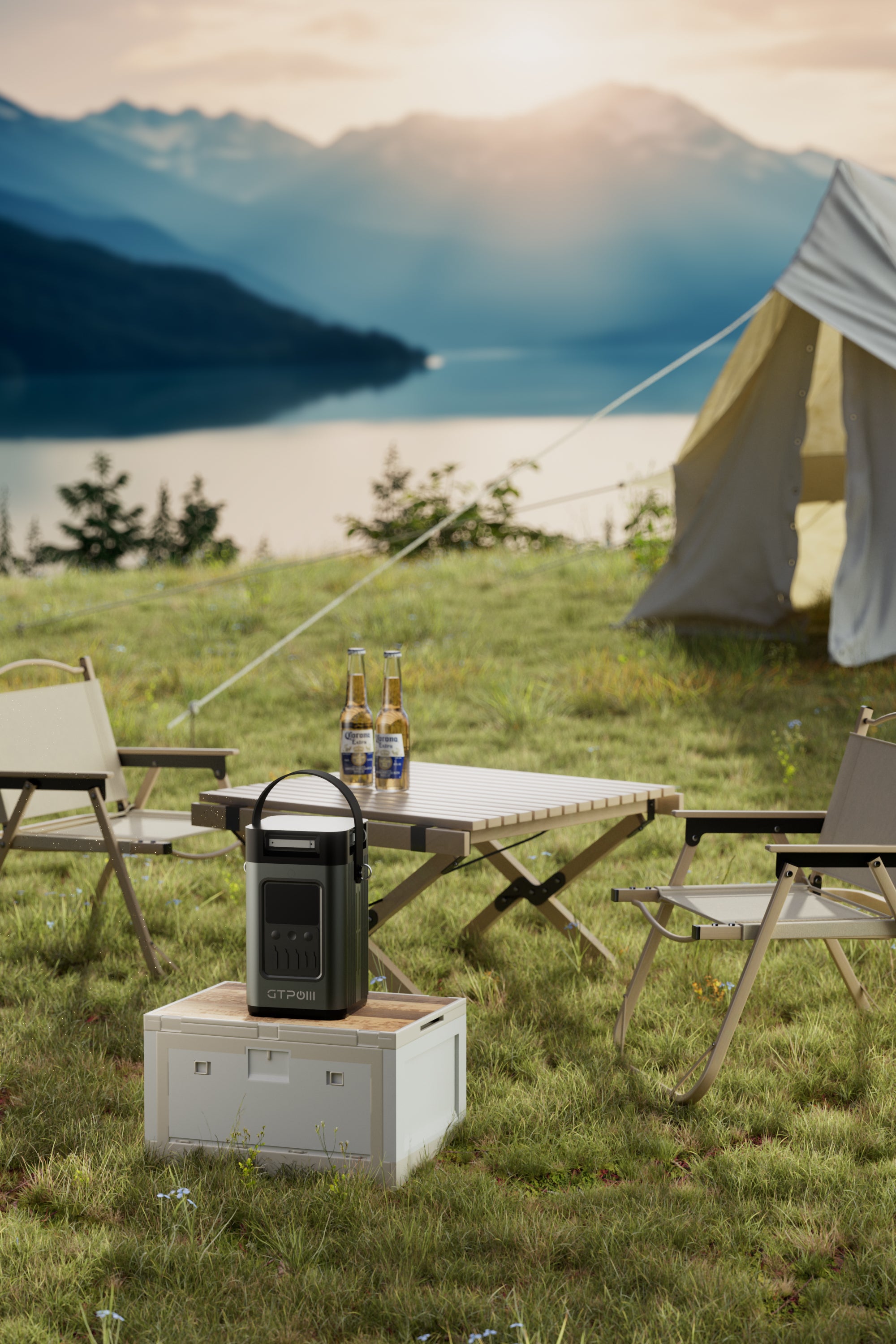
A portable power station combines a battery, solar charging electronics, and appliance outputs in one unit. It stores solar energy and supplies the fridge when sunlight is weak or absent.
Check that the station supports solar charging while powering its DC output. Also confirm that the output stays enabled during the fridge’s compressor-off periods; automatic shutdown settings can interrupt operation.
A portable power station is not the only option. A correctly installed battery system with a compatible solar charge controller and protected fridge supply can do the same job.
For occasional camping, the all-in-one station is usually simpler.
How Long Can You Keep Your Fridge Running?
Let’s use a planning example:
- Fridge consumption: 480Wh per day.
- Power station capacity: 500Wh nominal.
- Usable energy delivered to the fridge: 425Wh, assumed for this example.
- Daily solar contribution after relevant losses: 350Wh available to the fridge.
The daily shortfall is:
480Wh − 350Wh = 130Wh.
Starting full, the portable power station could theoretically cover that shortfall for about:
425Wh ÷ 130Wh = 3.3 days.
This is an energy-budget estimate, not a runtime guarantee. Solar timing, changing weather, battery reserves, and other connected devices affect the result.
With no useful solar input, the same usable capacity provides approximately:
425Wh ÷ 480Wh × 24 hours = 21 hours.
That is why “500Wh will cover cloudy days” needs qualification. It may cover an overnight period comfortably, but not several sunless days at this consumption level.
Starting fully charged helps, but it does not fix an ongoing energy deficit. If the fridge uses more than solar replaces, the battery eventually runs down—even in consistently sunny weather.
How to Choose and Set Up Your Solar Gear
1. Measure the Fridge’s Consumption
Use a DC energy meter, the station’s energy logging if available, or manufacturer consumption data with stated test conditions. Measure over 24 hours once the fridge has cooled down.
Test near your expected camping temperature. Results from a cool garage may underestimate consumption inside a summer vehicle.
This guidance applies to compressor fridges. Thermoelectric coolers can run much more continuously and need a different energy budget.
2. Choose Storage for the Hours Without Sun
A 300Wh portable power station can work for modest loads and short trips, but it is not a universal minimum. A 500Wh model provides more reserve, while higher consumption or longer cloudy periods call for more capacity.
Size the battery around overnight use and your desired backup duration—not the panel’s wattage alone.
Prefer the fridge’s compatible 12V DC connection when available. This generally avoids the added losses and idle consumption of running through an AC inverter. Check the outlet’s current rating and the fridge’s startup requirements.
3. Reduce Heat Before Adding Hardware
Pre-cool the fridge and load chilled food before departure. Keep it shaded, leave its ventilation openings clear, and avoid unnecessary lid opening.
Eco mode may help, depending on the model, but lower instantaneous power does not always mean proportionally lower daily consumption.
For perishable food, maintain 40°F / 4°C or below. Do not raise the temperature beyond safe storage conditions to save battery.
4. Give the Panel Good Exposure
Face the panel toward the sun and avoid partial shade. Adjusting its position can improve collection, especially when the sun is low, but there is no fixed percentage gain.
If you're using a bifacial solar panel like GTPOW's 100W model, the included carry bag has a silver reflective interior. Lay it flat under the panel to bounce extra light onto the rear side.
For bifacial panels, reflected light only helps when it reaches the rear surface. Laying the panel directly on opaque ground limits that benefit.
Is a 100W Solar Panel Setup Right for You?
A 100W solar panel plus a suitable battery can be a practical fridge setup for sunny, short camping trips. It is not a promise of continuous, self-sufficient refrigeration.
Measure daily consumption, allow for losses, and check whether solar actually replaces what you use. If it does not, add panel capacity, carry more stored energy, or plan a backup charging source.