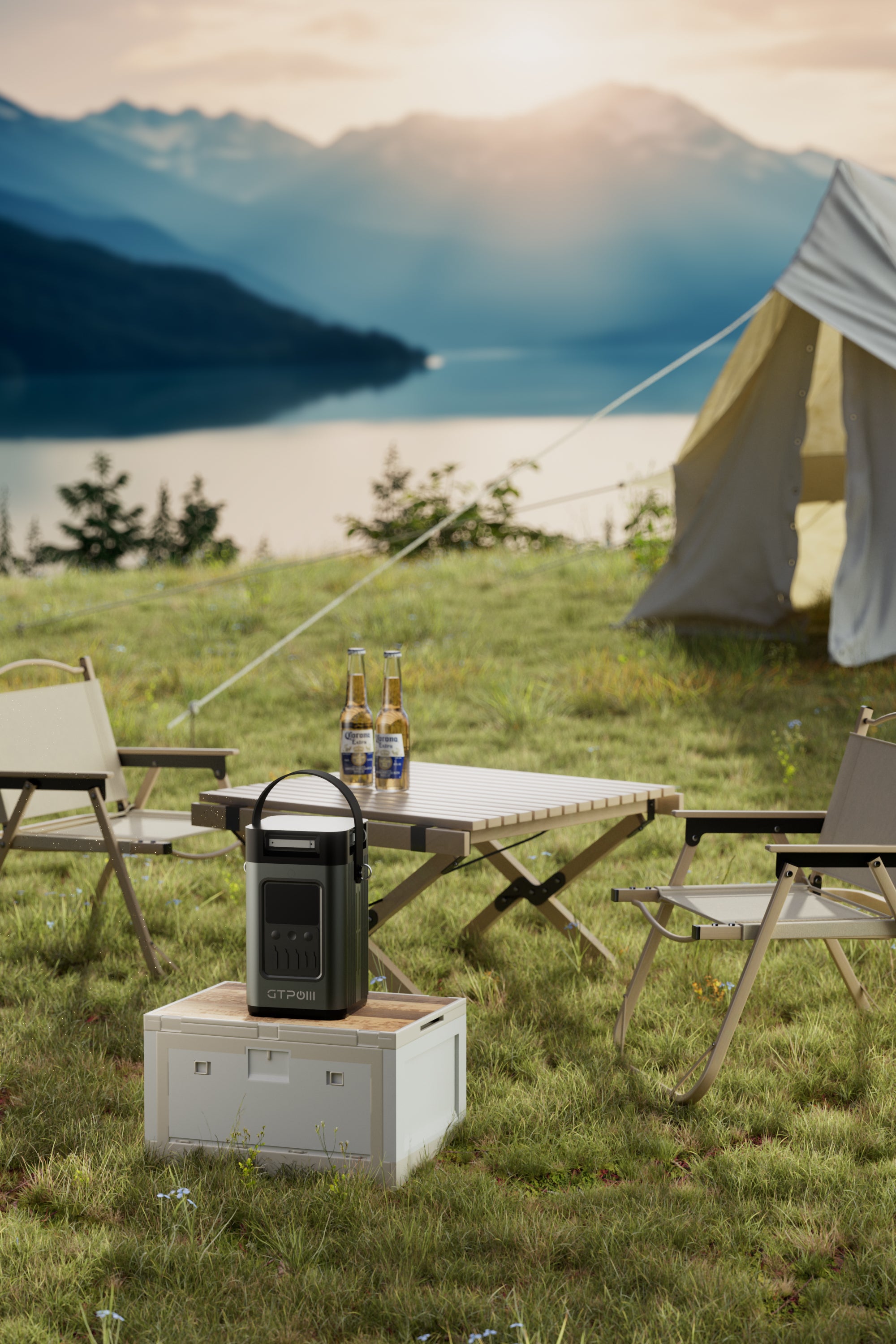
Weekend Family Camping: How to Pair a Portable Power Station with Solar Panels
Not every weekend camping trip needs a huge power setup. For a 2-day, 1-night family trip, the goal is simple: keep phones charged, run a few lights at night, and maybe keep a small fridge or cooler going.
The best setup depends on how your family actually camps. Pick the group that sounds most like you, then choose the matching power station and solar panel.
What Kind of Campers Are You?
Before buying a portable power station or solar panel, think about what you really bring to camp.
The Light Pack
You bring phones, camp lights, a Bluetooth speaker, and maybe a camera. No fridge, no fan, no big appliances. You just need the basics covered.
The Comfort Crew
You bring the basics, plus a small 12V fridge or electric cooler, and maybe a fan for warm nights. This is where most weekend families fit.
The Full Setup
You bring everything above, plus a projector, coffee maker, CPAP machine, or extra backup power. You want comfort and flexibility, even if the weather is not perfect.
Which one sounds like your family? Start there.
Three Setups That Work for a Weekend Trip
Setup 1: Light Pack — 400–600Wh Power Station + 100W Solar Panel
If you only need to charge phones, run a few LED lights, and play music, you do not need a large power station.
A 400–600Wh portable power station paired with a 100W solar panel is usually enough for a simple overnight trip. In good sunlight, a 100W solar panel can help top up the station during the day, so you are not relying only on stored power.
This setup is light, easy to carry, and ideal for families who do not use a fridge or high-power devices.
Setup 2: Comfort Crew — 700–1000Wh Power Station + 200W Solar Panel
This is the best fit for many families.
A 700–1000Wh power station gives you enough room for phones, camp lights, a speaker, a fan, and many small 12V fridges. Pair it with a 200W solar panel, or two 100W panels, and you have a practical weekend setup.
On a sunny day, a 200W panel can add a useful amount of power back into the station. It may not fully recharge the battery in every condition, but it can help keep your fridge running, your lights on, and your devices charged without much stress.
If you are not sure which setup to choose, this is the safest middle ground.
Setup 3: Full Setup — 1000Wh+ Power Station + 200W+ Solar Panel
If you plan to run a projector, coffee maker, CPAP machine, or several devices at once, go bigger.
Choose a 1000Wh or larger power station and at least 200W of solar input. If you camp in cloudy areas, shaded campsites, or cooler seasons with shorter daylight hours, more solar capacity gives you extra breathing room.
For CPAP users, check your machine’s wattage before the trip. Heated humidifiers can use much more power, so turning that feature down or off can make the battery last longer.
This setup is best for families who want comfort and do not want to watch every watt.
How Do You Connect Everything?
The setup is simple: the solar panel charges the power station during the day, and the power station runs your devices when you need them.
Before you buy, check three things.
1. Match the connectors
Make sure the solar panel cable works with your power station’s input port. Common connector types include MC4, Anderson, XT60, and DC barrel plugs. If they do not match, you may need an adapter.
2. Point the panel toward the sun
Place the panel in direct sunlight, not under trees or next to a tent shadow. Tilt it toward the h2est sun and adjust it once or twice during the day if you can.
3. Set it up early
Once you arrive at camp, connect the panel to the power station and let it charge while you unpack, cook, or relax. You do not need to babysit it. Just check the battery level later in the day.
A good rule: charge the power station first, then plug your devices into the station. The power station helps provide a steadier output than charging directly from a panel.
Is a Bifacial Solar Panel Better?
A bifacial solar panel can collect sunlight from both the front and back. It works best on reflective surfaces such as sand, snow, pale gravel, or light-colored ground.
In those conditions, you may see around 10%–20% more output. On grass, dirt, or shaded campsites, the difference is usually smaller.
So, is it worth it? If you often camp on beaches, snow, or open bright ground, yes. For normal forest or grass campsites, a standard solar panel is usually enough.
Simple Takeaway
You do not need to overthink the math for a short family camping trip.
For most 2-day, 1-night trips, a 700–1000Wh portable power station with a 200W solar panel is the most practical setup. It gives you enough power for a small fridge, lights, phones, and a fan without carrying more gear than you need.
Pick the setup that matches how your family camps. That way, you bring enough power, avoid overspending, and enjoy the weekend without worrying about a dead battery.