コンテンツにスキップ

30 Day Money Back Guarantee

Orders Ship for Free to Your Country.

Wish Lists Cart
0 アイテム

Portable Power Bank + Solar Panel vs. High-Capacity Power Bank – Which Setup Is Better for Hiking

による ManagerGTPOW 05 Aug 2026 0 コメント

Portable Power Bank + Solar Panel vs. High-Capacity Power Bank – Which Setup Is Better for Hiking

You’re two days into a three-day backcountry trip. Your phone is down to 15%, your offline map is only useful if the phone stays on, and the nearest outlet is miles away back at the trailhead.

Sound familiar?

For thousands of hikers and campers across the U.S., this is a real concern every weekend. Phones, GPS units, headlamps, cameras, and satellite communicators all need power. The longer you’re out, the more you find yourself watching that battery bar drop.

So here’s the real question: should you carry a larger power bank that can get you through the whole trip, or pack a smaller one and bring a solar panel to top it off along the way?

There’s no one-size-fits-all answer. It depends on how far you’re hiking, how much power your gear actually uses, and whether you’re covering miles every day or staying in one spot. Let’s break down what works best for the way you camp.

If You’re Covering Miles, Choose a High-Capacity Power Bank

If you’re the type of hiker who covers serious mileage every day — think 10+ miles, breaking camp early and rolling into the next site late — a high-capacity power bank is usually the smarter choice.

When you’re constantly on the move, you probably won’t have time to babysit a solar panel, chase direct sunlight, or adjust the panel every time the angle changes. Tree cover, cloudy weather, narrow trails, and changing terrain can also make solar charging unpredictable.

In this case, simplicity matters.

Charge your power bank before you leave, keep it in your pack, and pull it out whenever your phone, GPS, headlamp, or camera needs power. No setup, no waiting, no guessing.

For thru-hikers, backpackers, and anyone putting in long trail days, a reliable high-capacity power bank is often the most practical option.

If You’re Base Camping, Add a Solar Panel

If your trip involves setting up a main camp and staying there for a while, a power bank plus a solar panel makes a lot more sense. This setup works best for hiking trips where you are not moving camp every day, such as:

  • Setting up a backcountry base camp
  • Spending two or more nights at the same campsite
  • Doing day hikes from one main camp
  • Hiking in open, sunny terrain with time to set up a panel
  • Taking a slower-paced backpacking trip with longer breaks at camp

Solar works best when the panel is placed in direct sunlight for several hours. It is not always fast, and output depends heavily on sun angle, weather, shade, and panel size. But when you’re staying put, even a small solar panel can help extend your power supply and reduce how much battery you burn through.

So ask yourself one simple question:

Am I covering ground every day, or am I staying put?

If you’re moving all day, bring a larger power bank.

If you’re spending time at camp with good sunlight, pair your power bank with a solar panel.

How to Figure Out What Size Power Bank You Need

Choosing the right power bank starts with a little math and an honest look at your gear.

First, list every device you plan to bring:

  • Smartphone
  • GPS device or GPS watch
  • Headlamp
  • Camera or action camera
  • Satellite communicator
  • Smartwatch
  • Rechargeable earbuds if you use them on trail

Then check each device’s battery capacity and think about how many times you’ll need to recharge it during the trip.

As a quick rule of thumb:

  • A 5,000 mAh power bank can usually give a smartphone about one full charge.
  • A 10,000 mAh power bank can usually charge a smartphone about two times.
  • A 20,000 mAh power bank can usually charge most smartphones about three to four times, with extra power left for smaller devices.

Just remember: power banks do not deliver 100% of their rated capacity. Some energy is lost through heat, voltage conversion, cables, and charging circuits. In real-world use, you can expect around 15% to 30% capacity loss.

That means a 10,000 mAh power bank will not fully charge a 3,000 mAh phone three times. In most cases, it will be closer to two full charges, depending on the phone and charging conditions.

You should also factor in:

  • Trip length
  • Number of people sharing the power bank
  • Whether your phone is your main navigation tool
  • Weather conditions
  • How often you use your camera or GPS
  • Whether you can recharge from solar during the trip

For a solo weekend trip, 10,000 mAh may be enough.

For two people on a five-day trip with phones, GPS, and other small electronics, you’ll want more capacity.

Why the GTPOW 20,000 Swift Power Bank Works for Multi-Day Trips

That’s where the GTPOW Swift Power Bank 20,000 mAh comes in.

With 20,000 mAh of capacity, it gives you enough power to keep essential devices running through a multi-day trip. It is a solid choice for backpackers, weekend hikers, and anyone relying on their phone or GPS for navigation on multi-day trips.

One of its biggest advantages is 35W PD fast charging. That means it can recharge compatible devices quickly, and it can also recharge itself faster when connected to a suitable wall charger before your trip.

It supports wireless charging; simply place your phone on it to start charging. That’s especially helpful at camp when you don’t want to dig around for cables in the dark.

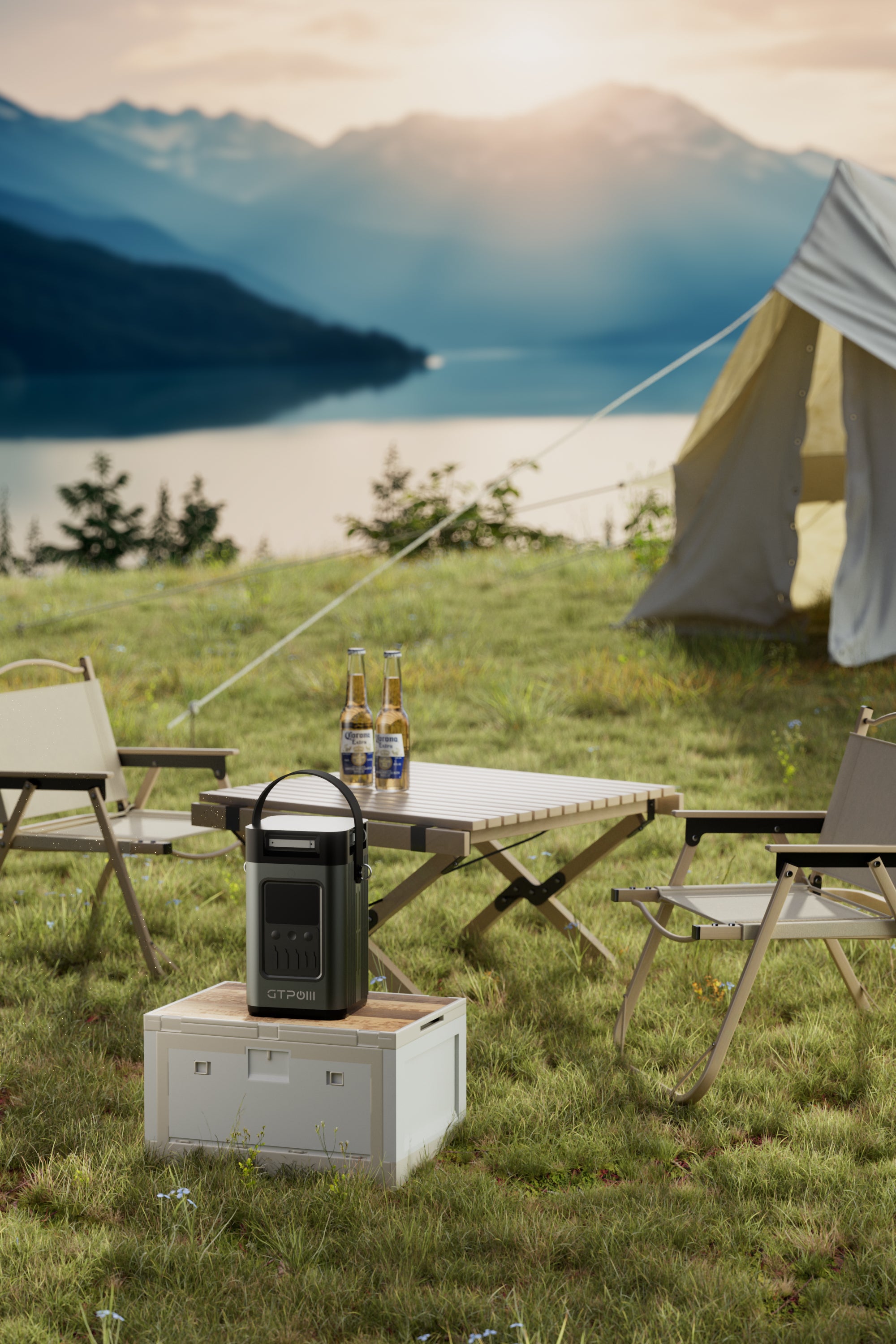
For longer trips or base camp setups, the GTPOW 20000 Swift Power Bank is also compatible with 10W solar panel charging. Pair it with a small foldable solar panel, and you can top off the power bank during the day when conditions are right.

At 498g, it is still packable for multi-day use and offers a strong balance between capacity, charging speed, and outdoor practicality.

The Bottom Line

Choosing between a power bank and a solar setup comes down to one question:

How do you move when you’re outdoors?

If you’re covering miles every day and need reliable power without stopping to manage gear, choose a high-capacity power bank like the GTPOW Swift 20,000 mAh.

If you’re setting up a backcountry base camp or spending more time at camp between shorter hikes, pairing your power bank with a small solar panel can help extend your power supply.

Either way, start by calculating your daily power use, then choose the setup that fits your trip style.

Get it right, and you’ll spend less time worrying about a dead phone — and more time enjoying the trail, the campsite, and everything you came outside to see.

前の投稿
次の投稿

コメントを残す

すべてのブログのコメントは公開前にチェックされます

Someone recently bought a

ご購読いただきありがとうございます!

このメールは登録されました!

外観を購入する

オプションの選択

GTPOW
限定更新情報や新着情報を受け取るにはサインアップしてください & インサイダー限定割引

最近見たもの

編集オプション
Back In Stock Notification
条項 & 条件
ローレム・イプサムとは何ですか? Lorem Ipsum は、印刷および植字業界の単なるダミー テキストです。 Lorem Ipsum は、無名の印刷業者が活字のゲラをスクランブルして活字見本帳を作成した 1500 年代以来、業界の標準的なダミーテキストです。それは 5 世紀だけでなく、電子写植への飛躍の時代にも、本質的には変わっていないまま生き残ってきました。これは、Lorem Ipsum の一節を含む Letraset シートのリリースによって 1960 年代に普及し、さらに最近では Lorem Ipsum のバージョンを含む Aldus PageMaker などのデスクトップ パブリッシング ソフトウェアによって普及しました。 なぜそれを使用するのでしょうか? 読者がレイアウトを見ると、ページの読みやすいコンテンツに気を取られてしまうことは、長年にわたって確立されてきた事実です。 Lorem Ipsum を使用するポイントは、「ここにコンテンツ、ここにコンテンツ」を使用するのとは対照的に、文字がほぼ正規分布になっており、読みやすい英語のように見えることです。多くのデスクトップ パブリッシング パッケージと Web ページ エディターは現在、Lorem Ipsum をデフォルトのモデル テキストとして使用しており、「lorem ipsum」を検索すると、まだ初期段階にある多くの Web サイトが見つかります。時には偶然、時には意図的に(ユーモアの注入など)、長年にわたってさまざまなバージョンが進化してきました。

オプションの選択

this is just a warning
ログイン
ショッピングカート
0 アイテム

出発前に...

初回注文5%オフ

5%オフ

初回注文時に以下のコードを入力すると、5% 割引になります

コードセール05

買い物を続ける