Should You Buy a Portable Solar Panel Just for Emergencies?
You bought a portable solar panel for emergencies. Maybe your grid goes down a few times a year. Maybe you use a CPAP machine or keep medication refrigerated. Maybe you just wanted to be ready.
That reasoning is reasonable. The problem is not why you bought it. It is what happens after.
You charge it once, test it, and put it in a closet. And there it sits. Emergency gear that is never used does not stay ready on its own. The battery is the weak point—not the solar panel.
The Real Cost of Sitting Idle
Let's be clear about what actually degrades in storage. It is usually the battery, not the solar panel.
Lithium batteries self-discharge slowly, and they do not like being stored fully charged or fully empty for long periods. Left untouched for months, a battery can drop to a voltage where the battery management system locks it out to protect the cells. Once that happens, it may refuse to charge at all.
The fix is simple. Store lithium batteries at around 50–60% charge in a cool, dry place, and top them up every few months. That keeps them healthy and ready.
The solar panel itself is far more forgiving. A panel stored indoors at normal temperatures loses very little performance over a couple of years. What you do want to check periodically is the physical condition—the folding seams, the connectors, the cable insulation. A quick visual inspection is usually enough.
The real cost of an emergency-only panel is simpler: you spent a few hundred dollars on something that sits in a closet. If it does not work when you need it, you did not buy insurance. You bought clutter.
Give It a Reason to Be Used
A portable solar panel does not have to be an emergency-only device. It can earn its keep all year.
On the balcony. Unfold it on a sunny day and charge a phone, a power bank, or a small station. No installation, no permits.
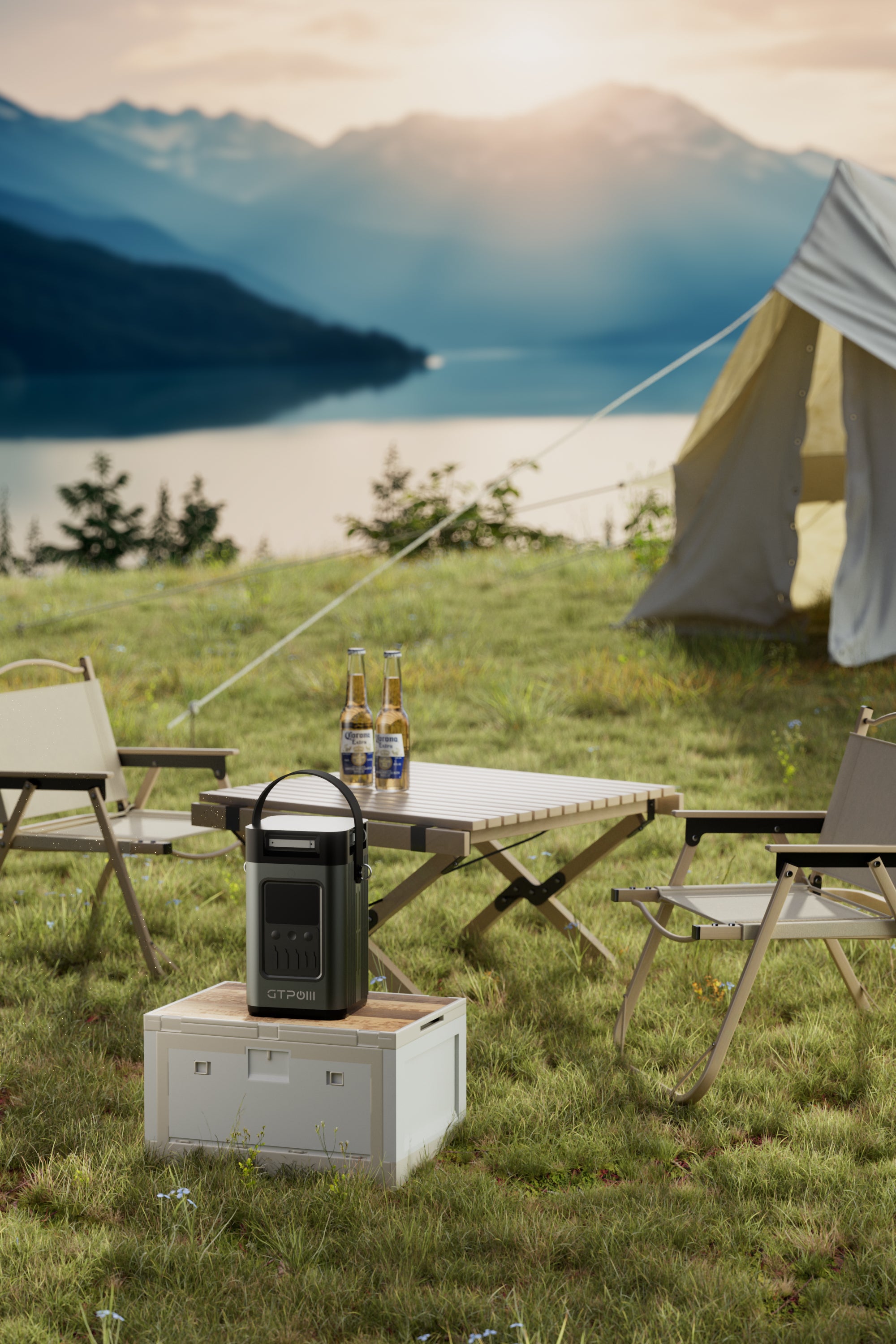
On short trips. Camping, fishing, a day at the beach, a tailgate. Bring it along and top off your devices while you are outside.
On hikes or bike rides. A lightweight folding panel or solar backpack can trickle-charge a phone while you move.
Every few months, run a test. Even if you are not going anywhere, pull it out, charge something, and make sure it still works. Fifteen minutes of maintenance keeps the battery healthy and keeps you familiar with the gear.
The point is not to force daily use. It is to make sure the panel is not forgotten until the one day you actually need it.
Not All Solar Gear Handles Emergencies the Same Way
If emergency backup is part of your plan, be honest about what each type of gear can do.
Portable foldable solar panel + power station. The best fit for emergencies. Plug and play. Pull it out during an outage and start generating power. It also works for camping, balconies, and road trips.
Balcony solar kit. Great for daily bill reduction, but a standard grid-tied kit shuts down during a blackout for safety reasons. If it has no battery, it will not power your home when the grid is down. Check before you count on it.
Solar backpack. Fine for light emergency use—keeping a phone or headlamp charged. The portable solar panel is small, so it cannot run much else.
Solar tote or small panel. The weakest option for a multi-day outage. These are usually 5–20W, enough to top up small devices but not to run a fridge, CPAP, or multiple electronics.
A Note on Medical Equipment
If you are planning solar backup for a CPAP machine, refrigerated medication, or other medical devices, treat it as a critical load, not a casual one.
Calculate the actual watt-hours the device needs over 24 hours, size the power station and solar panel to cover it with margin, and keep a non-solar backup plan. Contact the device manufacturer for guidance on off-grid power. This is one area where guessing is not enough.
Should You Buy One?
A few questions help.
How often does your power actually go out? If it is less than once a year, the emergency case is weaker.
How long do outages usually last? A few hours is very different from a few days.
Do you camp, fish, hike, or spend time outdoors? If yes, you will use a solar panel regularly. If no, it will sit.
Are you willing to pull it out every few months and run a test? If not, the battery will degrade whether you need it or not.
100W Bifacial Portable Solar Panel

Bottom Line
A portable solar panel bought only for emergencies will probably sit in a closet until the battery stops working. Not because the gear is bad, but because that is what happens to anything you never use.
But if you can find everyday reasons to use it—balcony charging, weekend trips, fishing, tailgating—then it stays active, stays healthy, and stays ready. The emergency backup becomes a bonus, not the whole point.
Before you buy, ask one question: besides a blackout, when will I actually use this? If you have an answer, it is worth it. If you do not, wait.