What Can a 40W Solar Panel Charge? A Practical Guide
Most portable solar panels you see on the market are 100W to 400W units designed for large power stations. A 40W panel is smaller, lighter, and easier to pack. It's not meant for heavy loads—but for power banks and small battery-powered gear, it's a solid match.
Here’s what a 40W solar panel can realistically charge.
Power Banks for Camping and Lightweight Travel
10,000mAh power bank – A solid choice for overnight trips or solo lightweight camping. It holds about 37Wh—enough to charge most smartphones once or twice. With a 40W panel in good sun, expect a full recharge in about 2 to 3 hours.
20,000mAh power bank – Better for weekend camping or multi-day trips. It holds about 74Wh and gives most phones three to four full charges. With the same 40W panel, plan on about 4 to 6 hours of good sun for a full recharge. Clouds, poor angle, or low input limits will stretch that.
30,000mAh to 40,000mAh outdoor power bank – A good fit for car camping, overlanding, or base camps where weight matters less. These larger units often include more ports and a built-in handle. A 40W panel can usually recharge one in about a day to a day and a half of good sunlight.
Real-world note: A 40W panel usually won’t deliver a steady 40W all day. In direct sun, expect around 28W to 35W in normal use. A bifacial panel like the GTPOW 40W Bifacial Portable Solar Panel can gain up to about 20% more output in ideal conditions when the back side catches reflected light from sand, snow, or a light-colored surface.

Built-In Battery Devices: Lights, Fans, and Radios
Beyond power banks, a 40W panel can help keep small devices with built-in batteries topped up during the day.
Rechargeable camp lights with built-in lithium batteries can often recharge in about 1 to 3 hours, depending on battery size and input wattage.
Battery-powered camp fans with built-in cells usually take longer, especially larger models. A small fan may recharge in a few hours, while a larger 10,000mAh fan can take most of a sunny afternoon.
Two-way radio charging docks are usually low-power devices and can often recharge from a 40W panel without issue, as long as the charging dock supports USB input.
Heavy-duty camp lights with larger batteries can also work, but expect longer charge times—often 3 to 5 hours or more, depending on capacity.
The key requirement: the device should support USB charging, either standard 5V USB or USB-C PD, depending on the panel's output ports.
For sensitive electronics, it's often better to charge a power bank first, then charge your device from the power bank. The power bank acts like a buffer when sunlight is inconsistent.
What to Look For in a Power Bank or Device
Not every power bank works well with a 40W solar panel. Here's what to check before you buy.
USB-C input matters. If you want to make the most of a 40W panel, look for a power bank with USB-C Power Delivery input. A bank that accepts 18W to 30W input is a good fit. If it only accepts 5V/2A input, it will still charge, but much more slowly.
Bidirectional fast charging is worth looking for. This means the power bank can accept fast charging from the panel and deliver fast charging to your phone, tablet, or other devices.
Pass-through charging can be useful—but check the specs. This lets you charge the power bank from the solar panel while also charging a phone from the power bank. Not all power banks support it, and even when they do, it can create extra heat and slow everything down. Use it when needed, and keep the power bank out of direct heat.
Meet the GTPOW 40,000mAh Power Supply
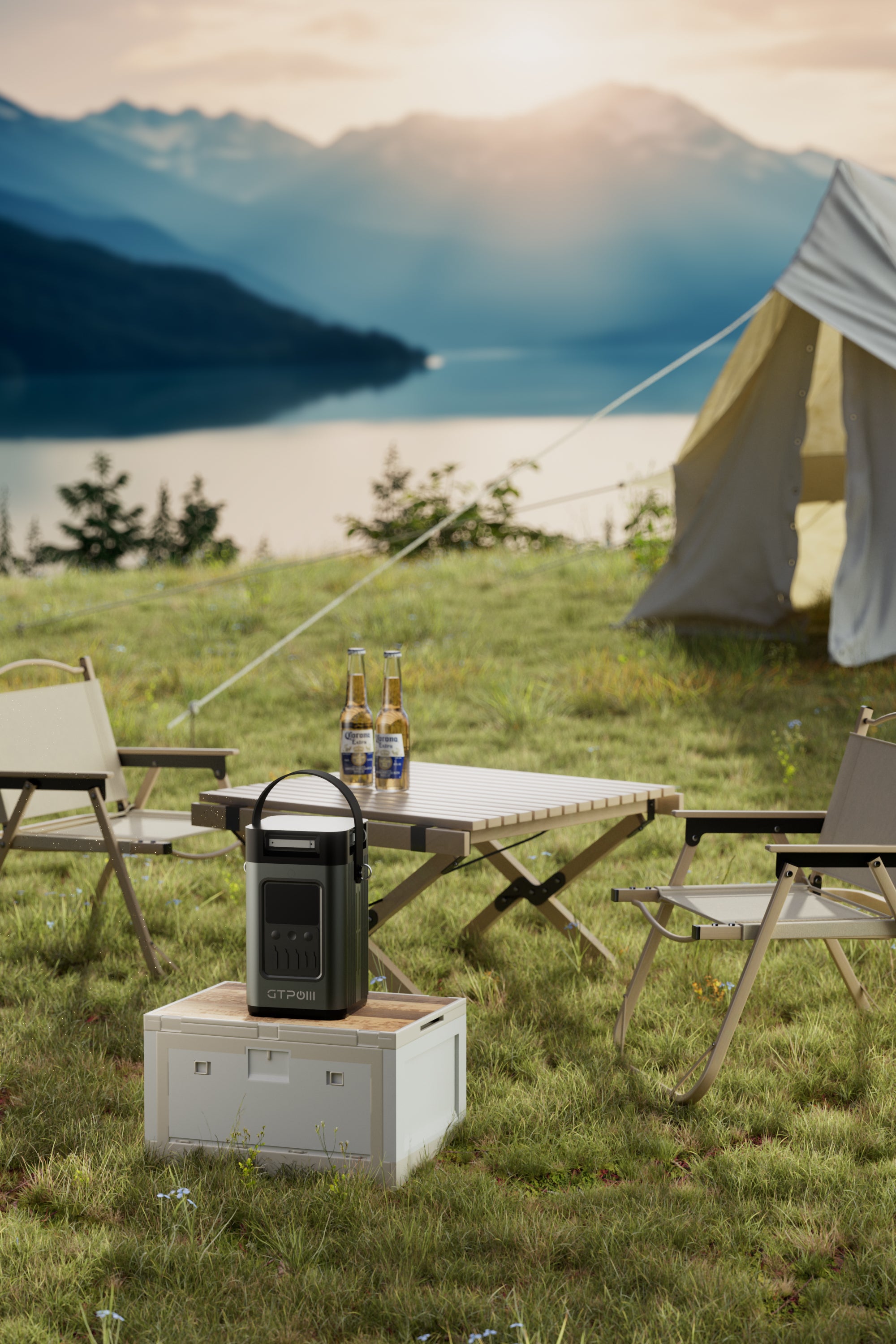
If you're looking for something that handles more than just phones and small gear, the GTPOW 40,000mAh Portable Energy Storage Power Supply is worth a look.
It packs enough juice to keep multiple devices running for days What sets it apart is the built-in lighting system: spotlight, flood light, and SOS modes, so it doubles as a camp light or emergency beacon when you need one.

The Bottom Line
A 40W solar panel is very useful for small camping gear. In strong direct sun, it can recharge a 10,000mAh power bank in about 2 to 3 hours, a 20,000mAh power bank in about 4 to 6 hours, and a larger 30,000mAh to 40,000mAh outdoor power bank in about a day to a day and a half of good sunlight. It can also keep devices like camp lights, small fans, and radios topped up throughout the day.
For the best results, pair it with gear that supports USB-C input, bidirectional fast charging, and pass-through charging if you need it. And if you're using a bifacial 40W panel like GTPOW's, give the back side access to reflected light whenever possible—such as over sand, snow, or a light-colored surface—to get the most from the panel without adding bulk to your pack.