How to Set Up a Portable Solar Panel System?
Setting up a portable solar panel system is actually pretty simple.
If you're camping, traveling in an RV, or just want some backup power at home, you basically need a way to collect solar energy, store it, and use it when you need it.
With a traditional setup, that usually means a solar panel, a charge controller, a battery, and an inverter. But if you don't want to deal with all those separate parts, there's a much easier option: connect a portable solar panel to a portable power station.
Let's take a look at both.
The Traditional Setup
If you're putting the system together yourself, the basic connection looks like this:
Solar panel → charge controller → battery → inverter → AC devices
The solar panel sends power to the charge controller. The controller manages the power going into the battery so the battery charges safely.
Then, if you want to run something that uses a regular household AC outlet, like a laptop or small appliance, you'll need an inverter to convert the battery's DC power into AC power.
There's nothing wrong with this setup. In fact, it's a good choice if you're building a larger or more customized off-grid system.
The tradeoff is that you have more parts to buy, more cables to connect, and more specifications to check.
The Easier Option: A Portable Power Station
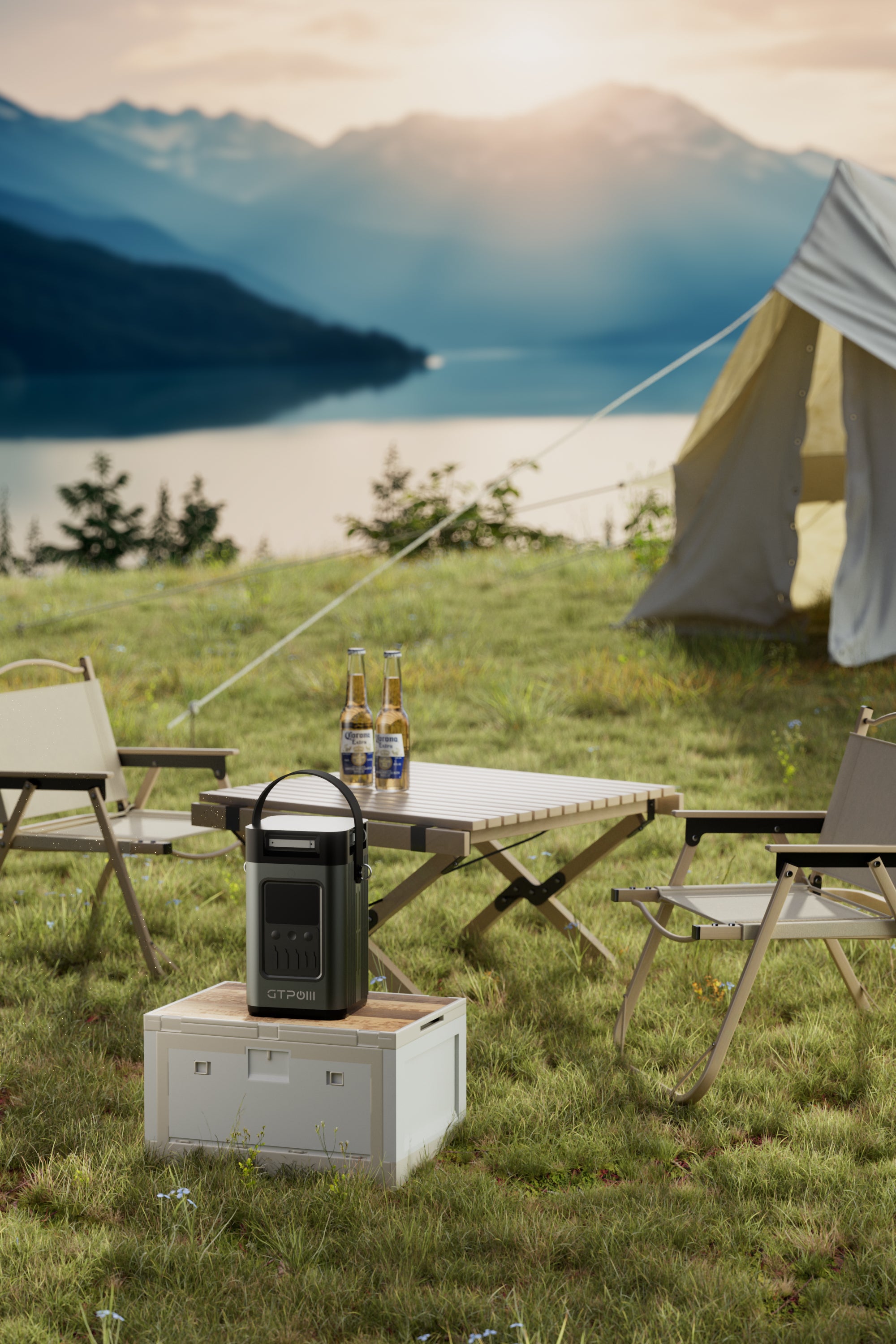
For most people going camping for a weekend, traveling in an RV, or looking for simple backup power, a portable power station is a lot easier.
The battery and charging electronics are already inside the power station. Most models also have AC outlets, USB ports, and DC outputs, so you can plug in different types of devices.
The setup is basically:
Portable solar panel → portable power station → your devices
That's it.
You unfold the Portable solar panel, connect it to the station's solar input, put the panel somewhere with good sunlight, and let it charge.
You don't have to build your own battery system or wire up a separate inverter. That's a big reason portable power stations have become so popular for camping and RV use.
How Do You Know if a Solar Panel Will Work With Your Power Station?
This is where you want to pay attention before you buy anything.
The first thing to check is voltage.
Look at the solar input specifications on your power station. You'll usually see a voltage range, such as a minimum and maximum input voltage.
Then look at your solar panel's specifications, especially the open-circuit voltage, or Voc.
The panel needs to stay within the input range of the power station. If the panel's voltage is too high, you can run into compatibility problems and potentially damage the equipment.
If you're using more than one panel, it gets a little more complicated because wiring panels in series and parallel changes the voltage and current.
So if you're not familiar with that, it's best to follow the power station manufacturer's recommended setup.
Don't Forget About Current and Wattage
Voltage isn't the only thing you need to check.
Your power station will also have a maximum solar input current and a maximum solar input wattage.
Let's say your power station accepts up to 200W of solar input. Connecting a 300W solar array doesn't mean the station will suddenly charge at 300W. The station will normally limit the input to what it can handle.
So when you're choosing a panel, don't just look at the biggest wattage number you can find. Check the power station's solar input limits first.
Check the Connector, Too
This one is pretty simple, but it's easy to overlook.
Portable solar panels can use different connectors. MC4 is common on traditional solar panels, while portable systems may also use connectors such as XT60 or Anderson-style connectors.
If the connector doesn't match your power station, you may need an adapter cable.
Just make sure you're using a cable that's actually rated for your system. Don't assume every adapter will work just because the plug fits.
What Size Solar Panel Should You Use?
That depends on how much power you need and how quickly you want to recharge the battery.
A 100W panel is a popular starting point for camping because it's still reasonably portable but can provide a useful amount of power during good sunlight.
If you're using a larger power station and want faster solar charging, you may want 200W or more. But there's no point buying a huge solar array if your power station can't accept that much solar input.
There's another thing to keep in mind: a 100W panel doesn't produce 100W all day long.
The 100W rating is based on standard test conditions. In real life, output changes constantly depending on the sun, clouds, shade, temperature, panel angle, and other conditions.
On a clear day with the panel pointed properly at the sun, you may get close to the panel's rated output for periods of time. Early in the morning, late in the afternoon, or on a cloudy day, you'll get much less.
What About Bifacial Solar Panels?
If you want to get more from a portable panel, you might also want to look at bifacial models.
A regular solar panel mainly collects sunlight from the front. A bifacial solar panel can also collect some light from the back.
But here's the catch: the back of the panel needs light.
If you put the panel on bright sand, light concrete, or another reflective surface, some of that light can bounce back toward the rear of the panel.
Put the same panel on dark grass or asphalt, and there's much less reflected light. So you shouldn't expect the same extra output everywhere.
That's one reason a bifacial panel can be particularly interesting for certain outdoor setups.
For example, the GTPOW 100W Bifacial Portable Solar Panel uses solar cells on both sides in a foldable design. If you're camping somewhere with a bright or reflective surface, you can take advantage of the light reaching the back of the panel without having to carry a much larger panel.
FAQ
1.Do I need a charge controller with a portable power station?
No. The power station already has the charging electronics it needs. Just connect a compatible solar panel to the station's solar input.
2.Can I connect two solar panels to one power station?
You can, as long as the combined voltage, current, and wattage stay within the power station's limits.
Be careful when connecting panels in series or parallel because the electrical characteristics change. If you're not sure which setup to use, follow the power station manufacturer's instructions.
3.What's the best angle for a portable solar panel?
Try to point the panel toward the sun rather than leaving it completely flat.
You don't have to stand there and adjust it every hour. Just getting the panel into a good position and keeping it out of the shade can make a noticeable difference.
4.Can I leave the panel connected all day?
Generally, yes, if the panel is compatible with the power station and the station is designed for solar charging.
The power station manages the charging process, so you don't need to manually disconnect the panel once the battery gets full.
The Bottom Line
You really don't need to make portable solar complicated.
If you're building a system from individual components, you'll typically have a solar panel, charge controller, battery, and inverter. That gives you plenty of flexibility, but it also means more wiring and more things to check.
If you want something simple for camping, RV trips, or emergency backup, a portable solar panel and power station is probably the easiest way to go.
Before you plug anything in, check the panel's voltage and the power station's solar input range. Then check the maximum current, wattage, and connector.
Once those numbers match, you're pretty much ready to go.
Put the panel somewhere sunny, point it toward the sun, plug it in, and let the system take care of the rest.