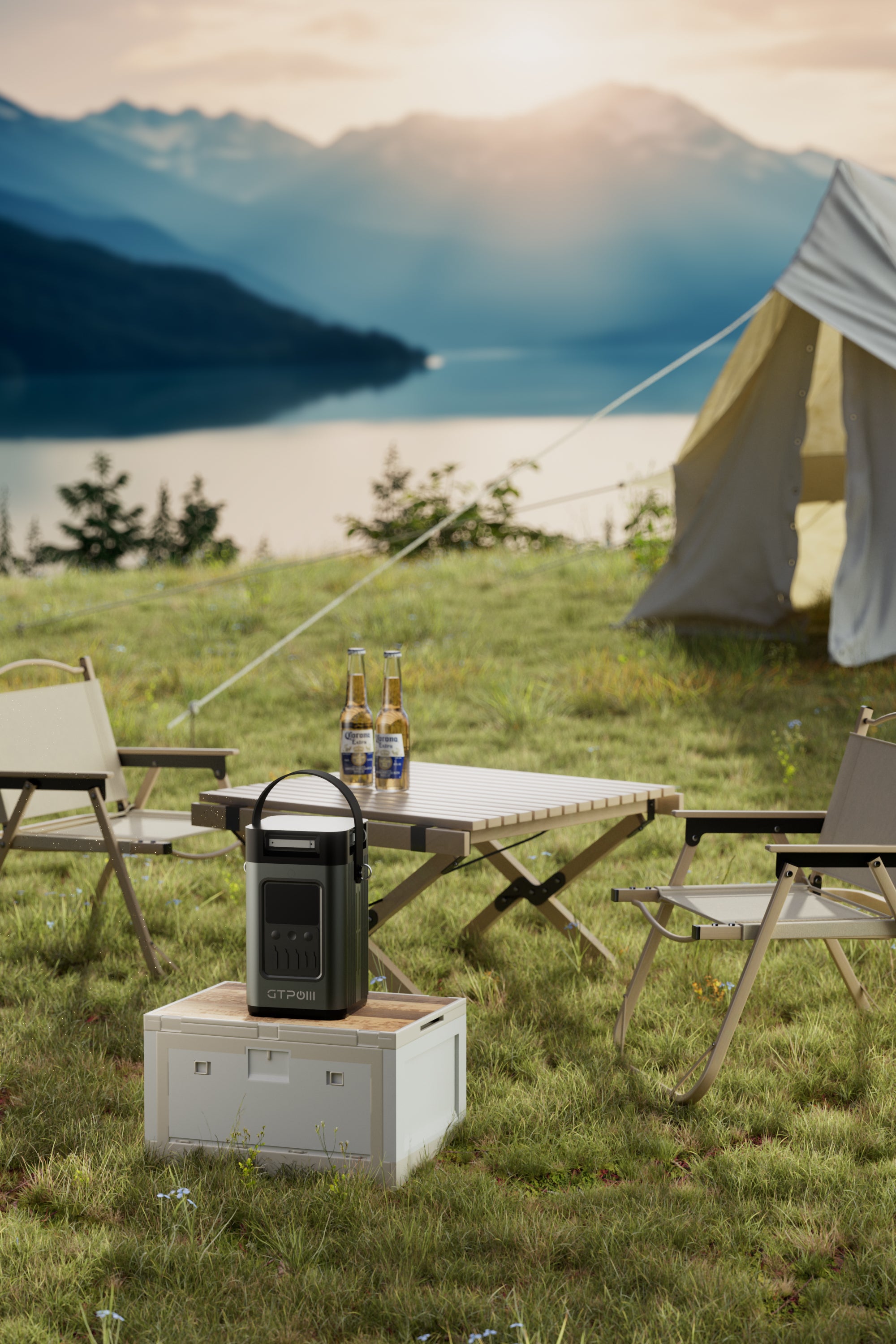
Banque d'alimentation portable + panneau solaire ou banque d'alimentation haute capacité – Quelle configuration est la meilleure pour la randonnée
Batterie externe portable + panneau solaire ou batterie externe haute capacité : quelle configuration est la meilleure pour la randonnée ?
Vous êtes au deuxième jour d'une randonnée de trois jours en pleine nature. La batterie de votre téléphone est à 15 %, votre carte hors ligne n'est utile que si le téléphone reste allumé, et la prise la plus proche se trouve à des kilomètres, au point de départ du sentier.
Ça vous dit quelque chose ?
Pour des milliers de randonneurs et de campeurs à travers le U.S. , C'est un vrai souci chaque week-end. Téléphones, GPS, lampes frontales, appareils photo et communicateurs satellites ont tous besoin d'énergie. Plus on reste dehors, plus on voit la batterie se décharger rapidement.
Voici donc la vraie question : faut-il emporter une batterie externe plus grande qui puisse vous permettre de tenir tout le voyage, ou emporter une plus petite et un panneau solaire pour la recharger en cours de route ?
Il n'existe pas de solution unique. Tout dépend de la distance de votre randonnée, de la consommation énergétique de votre équipement et de votre rythme de vie : marchez plusieurs kilomètres par jour ou restez au même endroit. Voyons ensemble ce qui convient le mieux à votre style de camping.
Si vous prévoyez de parcourir de longues distances, choisissez une batterie externe haute capacité.
Si vous êtes le genre de randonneur qui parcourt de longues distances chaque jour (plus de 16 km, en levant le camp tôt et en arrivant tard au prochain emplacement), une batterie externe de grande capacité est généralement le choix le plus judicieux.
Lorsque vous êtes constamment en déplacement, vous n'aurez probablement pas le temps de surveiller un panneau solaire, de rechercher la lumière directe du soleil ou d'ajuster son orientation à chaque changement d'angle. La couverture arborée, le ciel nuageux, les sentiers étroits et les variations de terrain peuvent également rendre la recharge solaire imprévisible.
Dans ce cas précis, la simplicité compte.
Chargez votre batterie externe avant de partir, gardez-la dans votre sac et sortez-la dès que votre téléphone, GPS, lampe frontale ou appareil photo a besoin d'être rechargé. Aucune installation, aucune attente, aucune incertitude.
Pour les randonneurs au long cours, les adeptes du trekking et tous ceux qui enchaînent de longues journées de marche, une batterie externe fiable et de grande capacité est souvent l'option la plus pratique.
Si vous campez en camp de base, ajoutez un panneau solaire
Si votre voyage implique d'installer un campement principal et d'y rester un certain temps, une batterie externe et un panneau solaire sont bien plus judicieux. Cette configuration est idéale pour les randonnées où vous ne changez pas de campement chaque jour, comme par exemple :
- Installation d'un camp de base en pleine nature
- Passer deux nuits ou plus au même emplacement de camping
- Faire des randonnées à la journée à partir d'un camp principal
- Randonnée en terrain dégagé et ensoleillé avec le temps d'installer un panneau
- Faire un voyage de randonnée à un rythme plus tranquille avec des pauses plus longues au campement
L'énergie solaire est optimale lorsque le panneau est exposé directement au soleil pendant plusieurs heures. La montée en puissance n'est pas toujours instantanée et dépend fortement de l'angle d'incidence du soleil, des conditions météorologiques, de l'ombrage et de la taille du panneau. Cependant, si vous restez immobile, même un petit panneau solaire peut contribuer à prolonger votre autonomie énergétique et à réduire la consommation de vos batteries.
Posez-vous donc une simple question :
Est-ce que je progresse chaque jour, ou est-ce que je stagne ?
Si vous êtes en déplacement toute la journée, emportez une batterie externe de plus grande capacité.
Si vous passez du temps en camping dans une région bien ensoleillée, associez votre batterie externe à un panneau solaire.
Comment déterminer la taille de batterie externe dont vous avez besoin
Choisir la bonne batterie externe commence par un peu de calcul et un examen honnête de votre équipement.
Commencez par lister tous les appareils que vous prévoyez d'apporter :
- Smartphone
- appareil GPS ou montre GPS
- Lampe frontale
- Caméra ou caméra d'action
- communicateur par satellite
- montre connectée
- Écouteurs rechargeables si vous les utilisez sur les sentiers
Vérifiez ensuite la capacité de la batterie de chaque appareil et réfléchissez au nombre de fois où vous devrez la recharger pendant le voyage.
En règle générale, voici quelques conseils :
- Une batterie externe de 5 000 mAh peut généralement fournir à un smartphone environ une charge complète.
- Une batterie externe de 10 000 mAh peut généralement recharger un smartphone environ deux fois.
- Une batterie externe de 20 000 mAh peut généralement recharger la plupart des smartphones environ trois à quatre fois, avec de l’énergie restante pour les appareils plus petits.
N'oubliez pas : les batteries externes ne délivrent pas 100 % de leur capacité nominale. Une partie de l'énergie est perdue par dissipation thermique, conversion de tension, câbles et circuits de charge. En utilisation réelle, vous pouvez vous attendre à une perte de capacité d'environ 15 % à 30 %.
Cela signifie qu'une batterie externe de 10 000 mAh ne permettra pas de recharger complètement un téléphone de 3 000 mAh trois fois. Dans la plupart des cas, elle permettra plutôt deux recharges complètes, selon le téléphone et les conditions de charge.
Il faut également tenir compte des éléments suivants :
- Longueur du trajet
- Nombre de personnes partageant la batterie externe
- Que votre téléphone soit votre principal outil de navigation
- conditions météorologiques
- À quelle fréquence utilisez-vous votre appareil photo ou votre GPS ?
- Pourrez-vous recharger vos appareils à l'énergie solaire pendant le voyage ?
Pour un week-end en solitaire, 10 000 mAh peuvent suffire.
Pour deux personnes partant en excursion de cinq jours avec téléphones, GPS et autres petits appareils électroniques, vous aurez besoin d'une plus grande capacité.
Pourquoi la batterie externe GTPOW 20 000 Swift est idéale pour les voyages de plusieurs jours
C'est là qu'intervient la batterie externe GTPOW Swift Power Bank de 20 000 mAh.
Avec une capacité de 20 000 mAh, elle vous offre suffisamment d'énergie pour alimenter vos appareils essentiels lors d'une excursion de plusieurs jours. C'est un excellent choix pour les randonneurs, les adeptes du trekking le week-end et tous ceux qui utilisent leur téléphone ou leur GPS pour se repérer lors de longs séjours.
L'un de ses principaux atouts est sa charge rapide PD de 35 W. Cela signifie qu'il peut recharger rapidement les appareils compatibles et se recharger lui-même plus rapidement lorsqu'il est connecté à un chargeur mural adapté avant votre départ.
Il prend en charge la recharge sans fil : il suffit de poser votre téléphone dessus pour lancer la charge. C’est particulièrement pratique en camping quand on n’a pas envie de chercher des câbles dans le noir.
Pour les longs voyages ou l'installation de camps de base, le Batterie externe GTPOW 20000 Swift Il est également compatible avec la recharge par panneau solaire de 10 W. Associé à un petit panneau solaire pliable, il permet de recharger la batterie externe en journée, lorsque les conditions sont optimales.
Avec ses 498 g, il reste facile à transporter pour une utilisation sur plusieurs jours et offre un excellent équilibre entre capacité, vitesse de charge et praticité en extérieur.
En résumé
Le choix entre une batterie externe et un système solaire se résume à une seule question :
Comment te déplaces-tu lorsque tu es à l'extérieur ?
Si vous parcourez des kilomètres chaque jour et avez besoin d'une alimentation fiable sans avoir à vous arrêter pour gérer votre équipement, choisissez une batterie externe haute capacité comme la GTPOW Swift 20 000 mAh.
Si vous installez un camp de base en pleine nature ou si vous passez plus de temps au camp entre deux randonnées plus courtes, associer votre batterie externe à un petit panneau solaire peut vous aider à prolonger votre alimentation électrique.
Dans les deux cas, commencez par calculer votre consommation électrique quotidienne, puis choisissez la configuration qui correspond à votre style de voyage.
Si vous faites les choses correctement, vous passerez moins de temps à vous inquiéter d'un téléphone déchargé et plus de temps à profiter du sentier, du camping et de tout ce que vous étiez venu voir.