Banco de energía portátil + panel solar versus banco de energía de alta capacidad: qué configuración es mejor para caminar
Batería externa portátil + panel solar vs. batería externa de alta capacidad: ¿qué configuración es mejor para hacer senderismo?
Llevas dos días de una excursión de tres días por la naturaleza. Tu teléfono tiene solo un 15% de batería, el mapa sin conexión solo te sirve si el teléfono está encendido y el enchufe más cercano está a kilómetros de distancia, en el punto de partida.
¿Te suena familiar?
Para miles de excursionistas y campistas en todo el mundo U.S. , Esto es una preocupación constante cada fin de semana. Teléfonos, dispositivos GPS, linternas frontales, cámaras y comunicadores satelitales necesitan energía. Cuanto más tiempo estés fuera, más rápido verás cómo baja la batería.
Así que aquí está la verdadera pregunta: ¿deberías llevar una batería externa más grande que te dure todo el viaje, o llevar una más pequeña y un panel solar para recargarla durante el trayecto?
No existe una respuesta única. Depende de la distancia de la caminata, del consumo de energía de tu equipo y de si recorres kilómetros a diario o te quedas en un solo lugar. Analicemos qué funciona mejor según tu estilo de acampada.
Si vas a recorrer largas distancias, elige una batería externa de alta capacidad.
Si eres de los excursionistas que recorren largas distancias cada día (más de 16 kilómetros, levantando el campamento temprano y llegando tarde al siguiente lugar), una batería externa de alta capacidad suele ser la opción más inteligente.
Cuando uno está constantemente en movimiento, probablemente no tendrá tiempo para vigilar un panel solar, buscar la luz solar directa o ajustarlo cada vez que cambie el ángulo. La cobertura de árboles, el clima nublado, los senderos estrechos y el terreno irregular también pueden hacer que la carga solar sea impredecible.
En este caso, la simplicidad es importante.
Carga tu batería externa antes de salir, guárdala en tu mochila y sácala siempre que tu teléfono, GPS, linterna frontal o cámara necesiten energía. Sin configuraciones, sin esperas, sin complicaciones.
Para los excursionistas de larga distancia, los mochileros y cualquiera que realice largas jornadas de senderismo, una batería externa fiable de alta capacidad suele ser la opción más práctica.
Si vas a acampar en un campamento base, añade un panel solar.
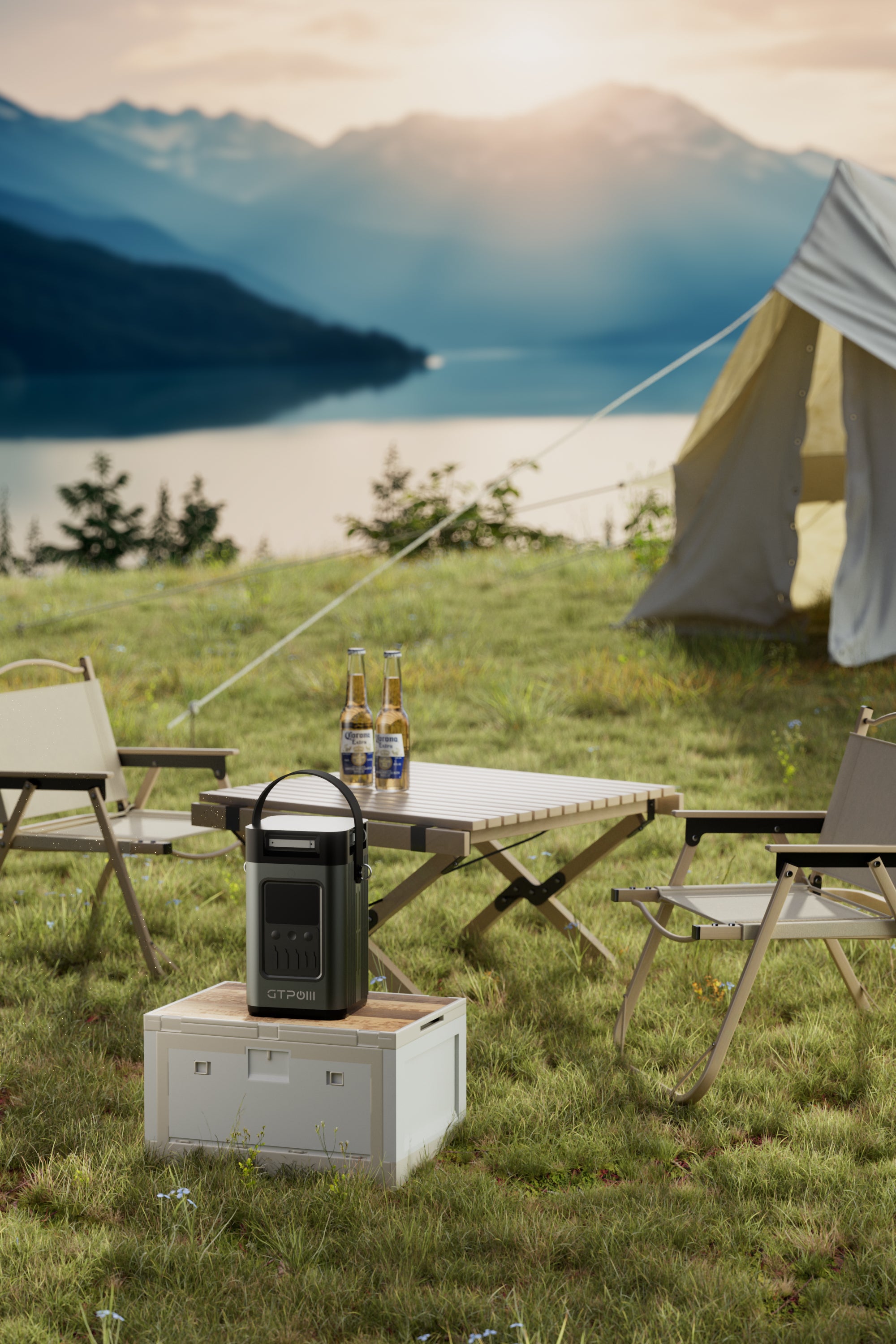
Si tu viaje implica establecer un campamento base y permanecer allí durante un tiempo, una batería externa y un panel solar tienen mucho más sentido. Esta configuración funciona mejor para excursiones en las que no se cambia de campamento a diario, como por ejemplo:
- Establecimiento de un campamento base en plena naturaleza.
- Pasar dos o más noches en el mismo camping.
- Realizar excursiones de un día desde un campamento principal.
- Senderismo en terreno abierto y soleado con tiempo para montar un panel.
- Realizar un viaje de mochilero a un ritmo más pausado con descansos más largos en el campamento.
La energía solar funciona mejor cuando el panel se coloca bajo la luz solar directa durante varias horas. No siempre es rápida, y la producción depende en gran medida del ángulo del sol, el clima, la sombra y el tamaño del panel. Pero si no estás en casa, incluso un panel solar pequeño puede ayudarte a prolongar tu suministro de energía y reducir el consumo de batería.
Así que hazte una pregunta sencilla:
¿Estoy avanzando cada día o me estoy quedando en el mismo sitio?
Si vas a estar en movimiento todo el día, lleva una batería externa de mayor capacidad.
Si vas a pasar tiempo en un campamento con buena luz solar, combina tu batería externa con un panel solar.
Cómo averiguar qué tamaño de batería externa necesitas
Elegir la batería externa adecuada comienza con unos cálculos sencillos y un análisis honesto de tus dispositivos.
Primero, haz una lista de todos los dispositivos que piensas llevar:
- Smartphone
- Dispositivo GPS o reloj GPS
- Lámpara de cabeza
- Cámara o cámara de acción
- Comunicador satelital
- Reloj inteligente
- Auriculares recargables si los usas en el sendero.
Luego, comprueba la capacidad de la batería de cada dispositivo y piensa cuántas veces tendrás que recargarlo durante el viaje.
Como regla general:
- Una batería externa de 5000 mAh suele ser suficiente para cargar un smartphone completamente una vez.
- Una batería externa de 10.000 mAh suele poder cargar un teléfono inteligente unas dos veces.
- Una batería externa de 20.000 mAh suele poder cargar la mayoría de los teléfonos inteligentes entre tres y cuatro veces, y aún queda energía extra para dispositivos más pequeños.
Recuerda: las baterías portátiles no ofrecen el 100 % de su capacidad nominal. Parte de la energía se pierde por el calor, la conversión de voltaje, los cables y los circuitos de carga. En el uso real, puedes esperar una pérdida de capacidad de entre el 15 % y el 30 %.
Esto significa que una batería externa de 10 000 mAh no cargará completamente un teléfono de 3000 mAh tres veces. En la mayoría de los casos, la carga será más cercana a dos cargas completas, dependiendo del teléfono y las condiciones de carga.
También debes tener en cuenta lo siguiente:
- duración del viaje
- Número de personas que comparten la batería externa
- Ya sea que su teléfono sea su principal herramienta de navegación
- Condiciones meteorológicas
- ¿Con qué frecuencia usas la cámara o el GPS?
- Si puedes recargar con energía solar durante el viaje.
Para una escapada de fin de semana en solitario, 10.000 mAh pueden ser suficientes.
Para dos personas en un viaje de cinco días con teléfonos, GPS y otros pequeños dispositivos electrónicos, necesitarán mayor capacidad.
¿Por qué la batería externa GTPOW Swift de 20.000 mAh es ideal para viajes de varios días?
Ahí es donde entra en juego la batería externa GTPOW Swift de 20.000 mAh.
Con una capacidad de 20 000 mAh, te proporciona la energía suficiente para mantener tus dispositivos esenciales funcionando durante un viaje de varios días. Es una excelente opción para mochileros, excursionistas de fin de semana y cualquier persona que dependa de su teléfono o GPS para navegar en viajes largos.
Una de sus mayores ventajas es la carga rápida PD de 35 W. Esto significa que puede recargar rápidamente los dispositivos compatibles y también recargarse a sí mismo más rápido si se conecta a un cargador de pared adecuado antes del viaje.
Es compatible con la carga inalámbrica; simplemente coloca tu teléfono sobre ella para que comience a cargarse. Esto resulta especialmente útil en el campamento, cuando no quieres andar buscando cables en la oscuridad.
Para viajes más largos o para establecer campamentos base, el Batería externa GTPOW 20000 Swift También es compatible con la carga mediante paneles solares de 10 W. Si lo combinas con un pequeño panel solar plegable, podrás recargar la batería externa durante el día cuando las condiciones sean favorables.
Con tan solo 498 g, sigue siendo fácil de transportar para usarla durante varios días y ofrece un buen equilibrio entre capacidad, velocidad de carga y practicidad para actividades al aire libre.
En resumen
La decisión entre una batería externa y un sistema solar se reduce a una sola pregunta:
¿Cómo te mueves cuando estás al aire libre?
Si recorres muchos kilómetros a diario y necesitas energía fiable sin tener que parar para gestionar tus dispositivos, elige una batería externa de alta capacidad como la GTPOW Swift de 20.000 mAh.
Si estás montando un campamento base en plena naturaleza o pasando más tiempo en el campamento entre excursiones más cortas, combinar tu batería externa con un pequeño panel solar puede ayudarte a prolongar tu suministro de energía.
En cualquier caso, empieza por calcular tu consumo diario de energía y luego elige la configuración que mejor se adapte a tu estilo de viaje.
Si lo haces bien, pasarás menos tiempo preocupándote por tener el teléfono sin batería y más tiempo disfrutando del sendero, del lugar de acampada y de todo lo que viniste a ver.