Balcony Solar Kits vs. Portable Solar Power Stations: Which Is Better Suited to Your Flat Balcony?
Want to use solar power on your flat balcony? Congratulations – there are finally some reliable options available. In the past, it was virtually impossible for flat dwellers to use solar power – the lack of a private roof, tenancy restrictions and HOA regulations all posed obstacles.
But today, two major solutions are changing the game: balcony solar kits and portable solar panels + portable power stations. Both allow you to harness the sun’s energy on your balcony, but they differ significantly in how they work, how they’re used and their compliance requirements.
What is a balcony solar kit? (Grid-connected system)
At the heart of a balcony solar kit is a grid-connected power generation system—one that converts sunlight into alternating current (AC), feeding it directly into your home’s electrical circuit to offset the electricity you purchase from the grid. A basic kit typically includes one or two solar panels, a micro-inverter, and mounting brackets and cables.
How it works: Sunlight hits the panels to generate direct current (DC), which the micro-inverter converts into household alternating current (AC).
Please note: In the US, you must use a micro-inverter certified to UL 1741, and a licensed electrician must install a dedicated bidirectional circuit breaker in your fuse box, or use a dedicated compliant socket that has passed the National Interconnection Standards audit.
Costs and Returns: As the installation requires an electrician and an application for a grid connection permit from the electricity supplier, the total cost is typically between $1,500 and $3,000 (including labour). In sunny areas, this can save you between $20 and $60 on your monthly electricity bill.
What are Portable Solar Power Stations? (Off-grid system)
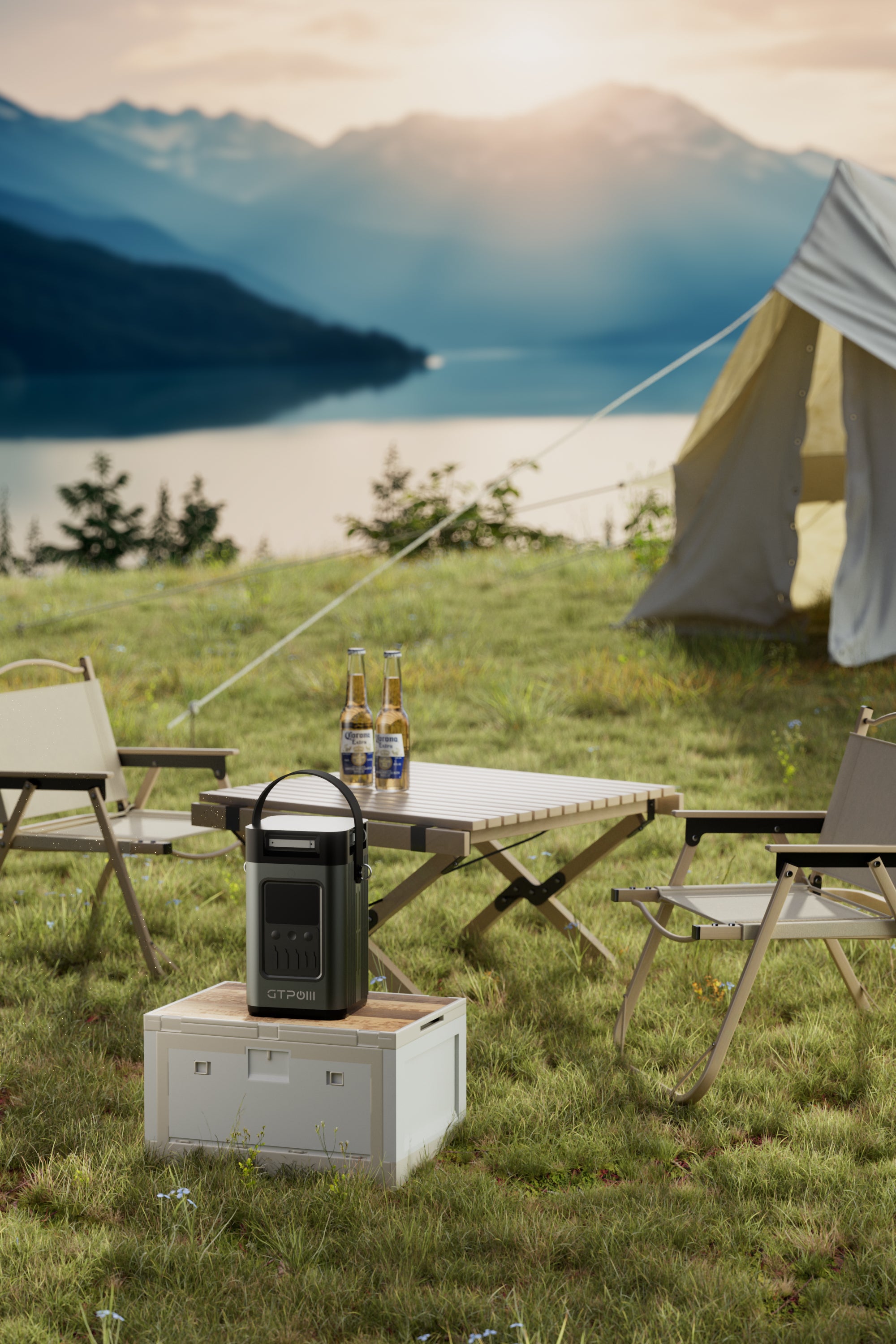
At the heart of this solution is a fully independent, closed-loop off-grid system that is not connected to your home’s electrical circuit. You have a set of foldable portable solar panels, combined with a portable power station.
How it works: Unfold the solar panels on your balcony or in your garden, position them towards the sun, and connect them to the power station using a DC cable; the sunlight will then begin charging the batteries inside the power station.
How to use it: Once fully charged, you can plug devices such as your mobile phone, laptop, mini-fridge or router directly into the power station’s sockets to draw power. The electricity flows from the power station without passing through your home’s electrical circuit and has no connection to the mains grid.
Advantages: It operates completely off-grid and is not subject to any grid-connection regulations. An entry-level kit can be purchased for a few hundred dollars, and when you move house, you can simply fold it up and take it with you; it’s also ideal for camping, road trips and emergency power cuts.
Key Comparison of US Apartment Options for 2026
To help you make a more informed choice, we have carried out a detailed comparison of these two options based on the key factors of greatest concern to US apartment residents, and have updated the information in line with state regulations for 2026:
|
Comparison Dimension |
Balcony Solar Kit (Grid-tied) |
Portable Solar Power Station (Off-grid) |
|
Residential Status |
More suitable for condo owners. |
Essential for flat tenants. |
|
HOA/Property Restrictions |
Extremely strict. Mounting panels on the balcony exterior usually requires written approval from the HOA, and it is subject to local interpretations of the Solar Rights Act. |
Completely free of restrictions. As long as there is no permanent damage to the exterior wall, temporary placement and foldable storage are considered personal items, and the HOA has no right to interfere. |
|
Utility Company Approval |
Mandatory application required. An Interconnection Agreement must be submitted, and in some areas, replacing with a bidirectional smart meter is mandatory. |
No approval is needed at all. It does not connect to the power grid, so it does not cause any regulatory issues. |
|
Usable During Power Outages |
No. Based on safety regulations, once the power grid goes out, the microinverter must automatically shut down and cannot be used as an emergency backup. |
Yes. As an independent "battery", it is the perfect emergency backup power supply. |
|
Cost Saving vs. Return on Investment |
Saves electricity bills in the long run. It directly offsets the basic daytime power consumption of the household, making it a long-term investment. |
Asset protection and multi-scenario use. In addition to home use, it can also be taken for outdoor camping, RV trips, making it a multi-functional tool. |
To summarise
Both options have their own merits; the key factor depends on your living situation and actual needs.
- If you are a tenant, or if regulations regarding grid-connected solar power in your state are still unclear, portable solar panels combined with a power station are the safer and more flexible option. They are legal, versatile, provide emergency power, and can be easily taken with you when you move house.
- If you own your flat, have obtained written approval from your HOA, and your state explicitly permits balcony solar installations (or you are willing to accept the regulatory risks), a balcony solar kit can help you save money directly on your electricity bills.
To meet the diverse needs of US flat dwellers, GTPOW offers both ‘plug-and-play’ balcony solar kits and ‘portable solar panel plus power bank’ combinations. Whether you prioritise long-term cost savings or the convenience of portability, you’ll find a solution that perfectly suits your lifestyle and living environment.